Simple Steps That Helped Me Find Stability Again
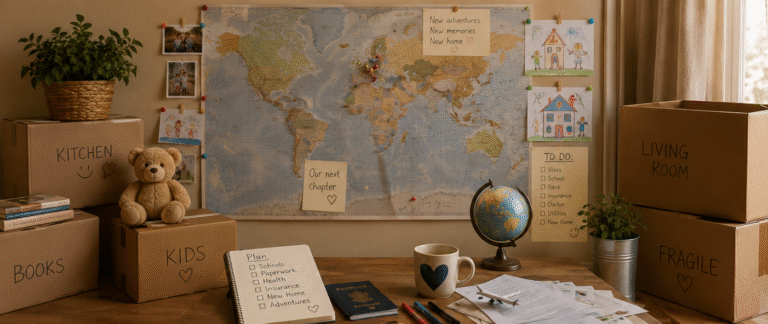
If you’re wondering how to get your life organized after a move, you’re probably feeling a mixture of excitement and exhaustion. One minute you’re unpacking boxes and dreaming about fresh starts. The next, you’re searching for a phone charger that somehow vanished despite being packed in a box labelled “important.”
Moving house has a funny way of making even the most organised person feel completely scattered. Suddenly, every task requires a decision. Which cupboard should the mugs go in? What’s the quickest route to school? What are we having for dinner? By the end of the day, even choosing something to watch on television can feel like hard work.
However, I’ve learned that getting organized after a move isn’t really about having a perfect system. It’s not about colour-coded planners or beautifully labelled storage bins. Instead, it’s about creating small pockets of predictability in a life that suddenly feels unfamiliar.
Those little routines matter far more than we often realise.
For children especially, routines create a sense of safety. They help answer the questions children don’t always ask out loud. What’s happening next? When will Mum be back? What does bedtime look like in this new place? Even simple things like breakfast at the same time each morning or reading a story before bed can make a house feel more like home.
Meanwhile, adults aren’t all that different. We like to think we’re adaptable, but most of us feel calmer when we know where the coffee mugs live and what tomorrow morning is likely to look like.
So if you’re feeling overwhelmed right now, take heart. You don’t need to organise your whole life overnight. Sometimes a few small routines are enough to make the world feel steady again.
Accept That Settling In Takes Longer Than You Expect
One of the hardest lessons I’ve learned is that settling into a new life takes far longer than unpacking the boxes. Unfortunately, patience has never been one of my strengths. I like a plan. I like knowing what’s happening next. And I definitely like things to happen quickly.
When I first moved, I assumed that once the paperwork was sorted, the furniture was in place, and everyone knew where they needed to be, life would somehow feel normal again. Instead, I discovered there’s a big difference between living somewhere and actually feeling settled there.
At first, that frustrated me. I wanted familiar routines, familiar roads, and the comfort of knowing exactly how each day would unfold. However, creating a new normal takes time. No amount of rushing seems to make it happen any faster.
What helped was focusing on one small thing at a time. Rather than worrying about everything that still felt unfamiliar, I concentrated on creating a smoother morning routine. School bags were packed the night before. Clothes were laid out. Anything important was left by the front door.
As a result, mornings became less chaotic and much more predictable. They almost ran on autopilot. More importantly, they gave us a small sense of stability in a period when everything else felt new.
Similarly, I found that each little routine created a tiny island of certainty in an unfamiliar world. The more of those routines we established, the more settled we all began to feel.
Looking back, I think I spent too much energy fighting the adjustment period. Eventually, I realised that settling in isn’t something you can force. It happens gradually, one small routine and one ordinary day at a time.
Recognising the Signs of Move-Related Stress
Sometimes stress after a move doesn’t look the way we expect it to. It isn’t always dramatic. Often, it shows up in smaller ways. Feeling unusually tired, becoming irritated over minor problems, forgetting simple things, struggling to concentrate, or feeling emotional for no obvious reason can all be signs that you’re still adjusting.
For me, the biggest clue was feeling constantly overwhelmed by ordinary decisions. When deciding what to cook for dinner felt like an impossible task, it was usually a sign that my brain had reached its limit for the day.
If you’re experiencing something similar, be gentle with yourself. Moving is more than a practical change of address. It’s an emotional adjustment too. And just like any major life change, it deserves time, patience, and a little grace.
Start With One Daily Routine
When life feels completely upside down, it’s tempting to try and organise everything at once. I know because I’ve done it more times than I care to admit. I’d make grand plans to sort the house, meal plan for the month, create a cleaning schedule, and generally transform myself into one of those effortlessly organised people you see on Instagram.
However, all that usually did was leave me feeling more overwhelmed.
Instead, I learned that it’s much easier to start with just one simple routine. After all, when you’ve recently moved, you’re already dealing with a hundred small adjustments every single day. Adding too much pressure on top of that rarely helps.
For us, the biggest difference came from getting the mornings under control. Mornings had become stressful, with last-minute panics over missing homework, forgotten water bottles, or shoes that seemed to vanish overnight. Therefore, I started preparing everything the evening before.
School bags were packed, clothes were laid out, and anything important was left by the front door. It wasn’t complicated, but it worked.
As a result, mornings became more predictable and far less chaotic. Instead of starting the day feeling rushed and frazzled, we had a routine that almost ran on autopilot. And honestly, that felt like a small miracle.
More importantly, those simple routines created a sense of stability. Children find comfort in knowing what comes next, especially when so much around them has changed. Likewise, adults benefit from that predictability too. It gives us one less thing to think about and helps life feel a little more manageable.
Eventually, other routines followed. But first, it was enough to focus on one small thing and do it consistently.
Create a Simple System for Everyday Tasks
When you’ve just moved, even the simplest tasks can feel complicated. Suddenly, everything takes more effort than it used to. You’re trying to remember appointments, find important paperwork, keep up with school emails, and work out what’s for dinner. It’s exhausting.
Therefore, creating a few simple systems can make a huge difference. The goal isn’t to become perfectly organised. It’s simply to make daily life a little easier.
Keep Important Documents Together
One of the first things I do after a move is create a home for important paperwork. School letters, contracts, insurance documents, and appointment details can quickly pile up.
Instead of leaving papers in random places, keep them in one folder or drawer. That way, when you need something, you’re not searching through three different bags and a kitchen cupboard.
Use a Simple Planner
After a move, there are often lots of appointments and deadlines to remember. A simple planner, wall calendar, or phone calendar can help keep everything in one place.
Personally, I like writing things down. Seeing the week laid out in front of me makes life feel much more manageable.
Reduce Dinner-Time Decisions
Few things drain my energy faster than deciding what to cook every evening. That’s why meal planning became one of the first systems I put in place.
It doesn’t have to be complicated. Even planning three or four dinners ahead can save a surprising amount of stress during the week.
Create Drop Zones
Every home needs a place for the things that seem to wander off. School bags, keys, shoes, and water bottles all need a designated spot.
As a result, mornings become much calmer because you’re not hunting for missing items five minutes before leaving the house.
Make It Easy to Maintain
Most importantly, keep your systems simple. If a system takes too much effort, you probably won’t stick with it.
The best systems are often the boring ones. They’re easy to follow, easy to maintain, and quietly make everyday life run more smoothly.
Focus on Organizing the Spaces You Use Most
I wasn’t entirely convinced that organizing the house should be a priority after moving. After all, there were plenty of bigger things to worry about. However, I quickly realised that having a place for our things helped us feel settled much faster.
Home isn’t just where you live. It’s where you know where the scissors are.
For children especially, familiar belongings provide comfort. Seeing favourite books on a shelf, knowing where their toys belong, or having the same bedtime routine in a new bedroom helps create a sense of security. As a result, putting those everyday items in place became more important than making everything look perfect.
At the same time, I learned that not every box needs to be unpacked immediately.
Some boxes can wait.
In my case, the photo albums stayed packed for quite a while. Not because I didn’t care about them, but because I didn’t have the mental space to deal with everything they represented. Right then, I needed to focus on the present and on building our future rather than constantly looking backwards.
Similarly, I found it helpful to prioritize the spaces we used every day. The kitchen, children’s bedrooms, school supplies, and everyday essentials were unpacked first. The random box labelled “miscellaneous cables” could wait its turn. Quite honestly, I suspect it’s still judging me from a cupboard somewhere.
Most importantly, I stopped aiming for a perfectly organized home. Instead, I focused on creating a space that worked for us. Little by little, familiar belongings found their place, routines became easier, and the house began to feel like ours.
Because sometimes feeling at home isn’t about unpacking every box. It’s about unpacking the right ones.
Build New Habits That Support Your New Life
One thing I discovered after moving is that not every habit needs to be left behind. At first, I thought I had to build an entirely new life from scratch. New routines, new traditions, and new ways of doing everything.
However, some habits travel surprisingly well. They just need a new setting.
I’ve always loved how people in Ireland will happily chat to complete strangers. Usually about the weather, because apparently discussing rain is a national pastime. Yet those little conversations make everyday life feel friendlier. After moving, I realised I didn’t have to leave that behind. A smile still works in a different country, and so does saying hello.
At the same time, I had to adjust to my new surroundings. We found favourite walking routes, discovered local playgrounds, and worked out where to buy the things we needed. Little by little, the unfamiliar became familiar.
Similarly, small healthy habits made a big difference. Planning meals, preparing school bags the night before, or taking a daily walk helped our days run more smoothly. None of these things are particularly exciting, but neither is searching for a missing shoe five minutes before leaving the house.
Most importantly, I learned to celebrate small wins. Every new routine, every task completed, and every week that felt a little easier helped build confidence. Some habits stuck, while others quietly disappeared, and that’s perfectly normal.
The goal isn’t perfection. It’s creating routines that work for your family. Eventually, those small habits, familiar faces, local resources, and everyday rhythms start to add up. Before you know it, the place that once felt strange begins to feel like home.
Stop Trying to Do Everything at Once
If there’s one mistake I made after moving, it was trying to do everything at the same time.
I wanted the house unpacked, the paperwork completed, the children settled, new routines established, and life back to normal as quickly as possible. Like many women, I thought I could juggle it all. However, there is a fine line between being organised and becoming a scattered busybody who can’t remember why she walked into a room.
At one point, my brain felt like it had twenty browser tabs open, all playing music at the same time.
Every task felt urgent. Every decision felt important. As a result, I became so overwhelmed that very little actually got done.
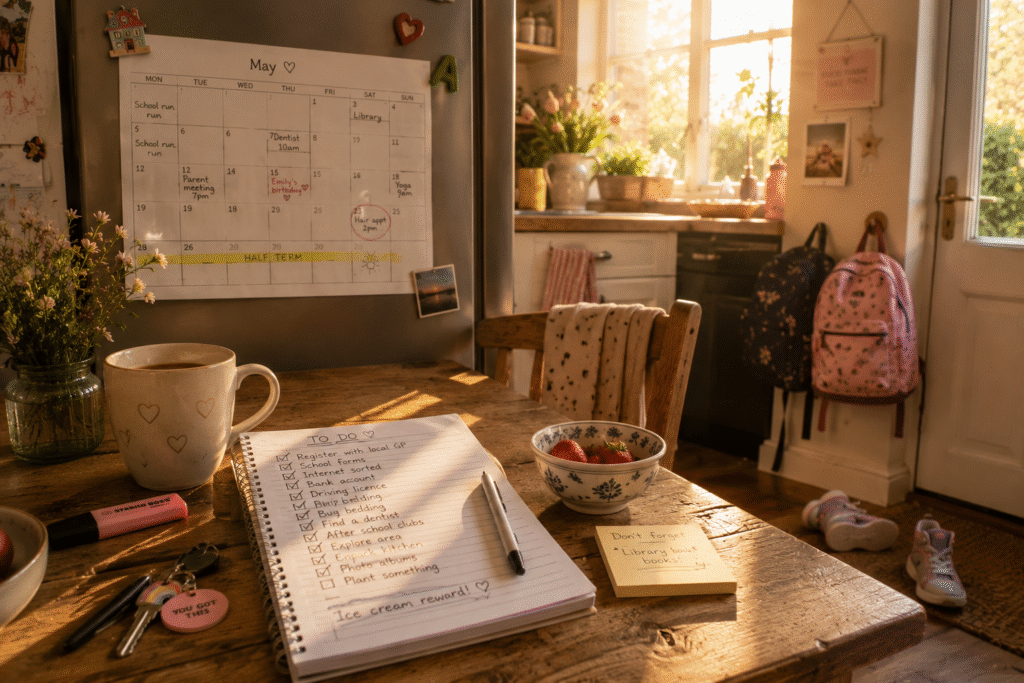
Eventually, I sat down with a notebook and wrote everything down. Not neatly. Just every task, reminder, worry, and random thought as it appeared. Once it was on paper, I could stop carrying it around in my head. Better still, I could sort it by priority and focus on one thing at a time.
I also learned that some things simply had to wait. Saying no isn’t always easy, especially when you’re used to being the person who keeps everything moving. However, protecting your energy is sometimes the most productive thing you can do.
Most importantly, we started celebrating small wins.
One of the best discoveries after moving was just how good the ice cream was. Somewhere along the way, we began measuring achievements in scoops. A school form completed might be a one-scoop win. Surviving a mountain of paperwork could easily qualify for a full bowl.
It sounds silly, but recognising progress matters. Because when you’re rebuilding a life after a move, success rarely comes from one huge breakthrough. More often, it comes from lots of small wins, one scoop at a time.
Final thoughts
Learning how to get your life organized after a move isn’t really about becoming more productive. It’s about creating enough stability that life starts to feel manageable again.
Looking back, the things that helped most were surprisingly simple. Accepting that settling takes time. Creating a few small routines. Organizing the spaces we used every day. Building new habits while keeping some of the old ones we loved. And perhaps most importantly, stopping the constant attempt to do everything at once.
Because despite what we tell ourselves, nobody successfully rebuilds an entire life in a weekend.
A move brings change, uncertainty, and more decisions than most of us would like. It’s no wonder we sometimes feel overwhelmed. However, I’ve learned that it helps to view the whole experience with a pinch of salt and a bucket load of humour.
After all, there will be days when you can’t find the scissors, the school shoes mysteriously disappear, and the box you urgently need is somehow the only one without a label. You can either cry about it or laugh about it. Most days, laughing is far less exhausting.
Most importantly, give yourself permission to settle slowly. A house doesn’t become a home the moment the moving van leaves. It happens gradually through routines, familiar faces, favourite mugs, and countless ordinary moments that quietly stitch themselves together.
And if you’re wondering whether you’re making progress, you probably are.
One day you’ll realise you know the quickest route to school, have a favourite place to buy coffee, and can find the scissors without launching a full-scale search operation.
That’s when you’ll know you’re getting there.
And if all else fails, I highly recommend measuring achievements in ice cream. Some days are worth a single scoop. Others deserve the full bowl with extra toppings.