Living in survival mode wasn’t something I chose—it happened so gradually that I barely noticed until it had become my normal.
Looking back, I can see how deeply exhaustion shaped everything. Not the kind that disappears after a good night’s sleep, either. This was the kind that settled into my bones and followed me everywhere. Every day felt like a series of responsibilities to carry, problems to solve, and endless decisions to make. Some researchers estimate that the human brain makes tens of thousands of decisions every day, most without us even realising it. When you’re already exhausted, even the smallest choices can feel heavy.
What surprised me most was how survival mode crept up on me so slowly and quietly that I didn’t even realise I was in it.
I withdrew from people. Messages went unanswered. Some days I sat in the car when I picked up the girls because I didn’t have the energy to face another conversation. At the farm, I’d disappear into the tunnels whenever I got the chance. They felt safe somehow—quiet places where nobody expected anything from me.
The strangest part was that I wasn’t particularly sad or anxious.
I was numb.
I spent hours listening to David Bayer, Tony Robbins, podcasts and YouTube videos, trying to understand why I didn’t seem to feel anything anymore. What I know now is that survival mode can become normal. You stop noticing how hard things are because you’re so focused on getting through them.
What Survival Mode Actually Felt Like Day to Day
Before I lived through it, I imagined survival mode as something dramatic. Panic. Crisis. Chaos.
The reality crept up quietly.
I woke up tired and went to bed tired. My mind constantly scanned for the next problem, the next bill, the next thing that might go wrong.
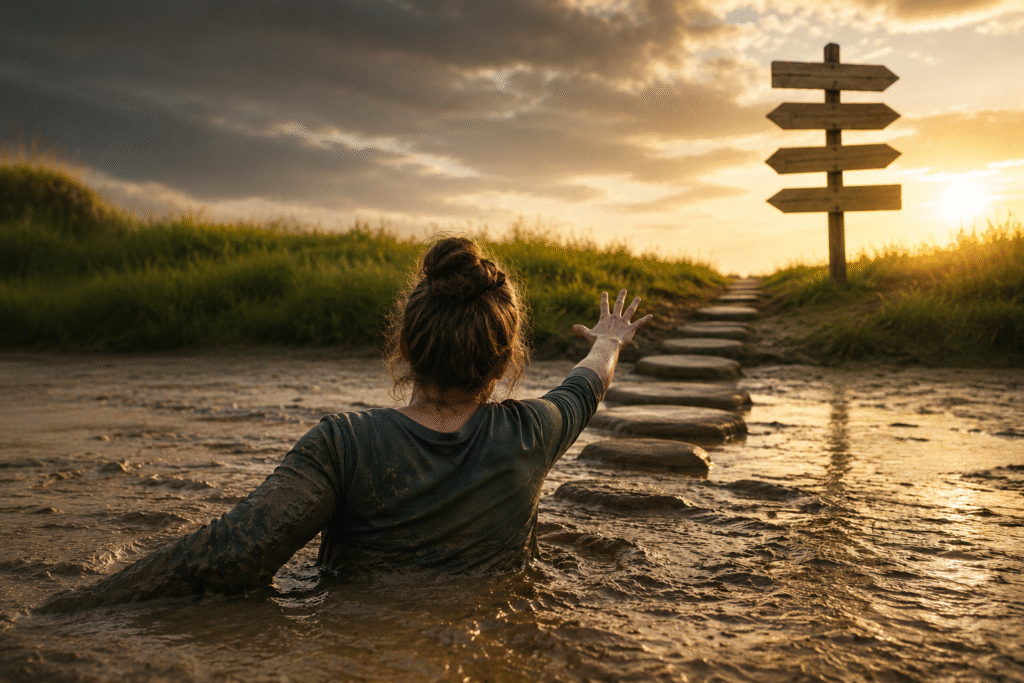
For me, survival mode felt like standing in quicksand.
Money was tight, and no matter how hard I worked, I couldn’t get ahead. The harder I fought, the faster we seemed to sink. Every paid bill uncovered another expense waiting around the corner. At one point, I became convinced my bank account existed purely to transfer money to unexpected emergencies.
But money wasn’t the hardest part.
The constant tension was worse.
Arguments simmered beneath everything. I never knew who was angry with whom, who was telling the truth, or whether an innocent comment over coffee would return as a shouting match by dinner. I spent so much energy trying to keep the peace that I forgot what peace actually felt like.
It was lonely too.
After a while, I stopped trusting the sticks people held out to help. When you’ve spent long enough navigating conflict and uncertainty, even genuine support can feel dangerous.
So I kept going.
From the outside, life probably looked normal. Inside, I ran almost entirely on adrenaline, determination, and a level of stubbornness that bordered on a personality trait.
That’s the strange thing about survival mode. It doesn’t always feel like a crisis. Sometimes it feels like normal life.
You don’t realise you’re standing in quicksand until you finally reach solid ground.
The Exhaustion of Carrying It All
I thought moving would bring instant relief.
In some ways, it did. The quicksand I’d been standing in for years finally started to harden beneath my feet. For the first time in a long time, I felt some control returning. What surprised me was that relief and panic can exist at exactly the same time.
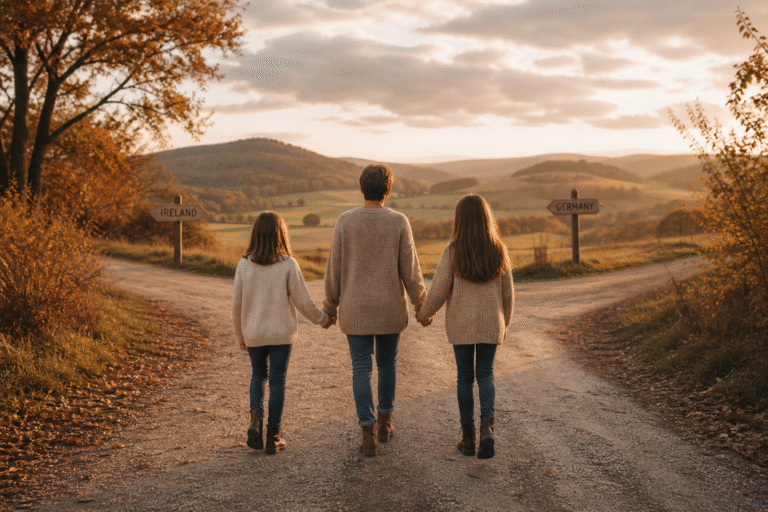
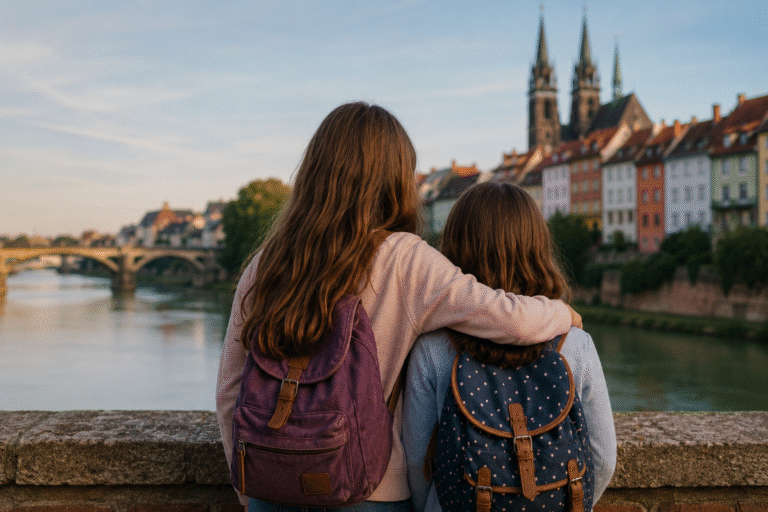
Germany offered a fresh start, but it also came with a mountain of paperwork. Every form seemed to require three others first. Some days it felt like I was playing a game where nobody had explained the rules, but I was still expected to win.
At the same time, I carried a backpack full of emotions that I didn’t want my girls to feel.
There was grief, anger, fear, and exhaustion. But they were carrying enough already. They were trying to settle into a new country, a new school, and a language they didn’t understand. Their frustrations often landed with me because I was their safe place.
So I absorbed the tears, the outbursts, the homesickness, and the worries while trying to convince everyone—including myself—that we were doing fine.
During the day, I managed.
The nights were another story.
For the first time in my life, sleep abandoned me. My brain replayed conversations, appointments, worries, and worst-case scenarios on a loop. Problems that seemed manageable at noon felt enormous at three in the morning.
I’m not a drinker, I don’t smoke, and I’ve always hated taking tablets. For years I considered that a strength. Then I found myself lying awake night after night thinking that, for the first time ever, my lack of bad habits felt like a disadvantage.
So I stared at the ceiling instead, carrying tomorrow long before it arrived.
When Grief Has No Room
One of the strangest things about that year is that I didn’t really grieve. Not because there wasn’t anything to grieve, but because I spent all my energy surviving.
Looking back, I can see how carefully I avoided it.
After the bees left, I rarely went up to the farm. I could have dug up perennial plants and given them away, but I didn’t. When it came time to pack, I boxed up years of my life without really looking at them. Photos, keepsakes, memories—they all disappeared into cardboard boxes.
When we arrived in Germany, those boxes stayed closed.
The photo albums I’d spent hours creating sat untouched. Every time I came across one, I put it straight back. Not today, I would think.
The only thing from the farm I unpacked was the seeds.
I planted them almost immediately. Looking back, I think they were the only part of my old life I felt ready to carry forward.
The problem with avoiding grief is that life keeps moving.
Every loss leaves a gap. Not just in your life, but in who you are. Lose enough things, and eventually you start wondering who you’re supposed to be now.
In my case, almost everything changed.
We had a family farm. I grew vegetables without herbicides or pesticides. We raised bees, grew food, and built our lives around sustainability. Those things weren’t hobbies. They were part of who I was.
Now I sell cleaning products for a living.
If you’d told my younger self that was where I’d end up, she probably would have choked on her homegrown kale.
The hardest loss wasn’t the farm itself. It was losing the version of me who belonged there. Until I faced that, I couldn’t begin to figure out who I wanted to become next.
Finding Small Ways Back to Myself
Part of me assumed I was further along than that. But healing isn’t a straight line, and apparently neither is grief.
What has changed is how I respond to it.
Instead of trying to outrun uncomfortable feelings, I’m slowly learning to make room for them. I’ve started meditating again, even if it’s only for a few minutes at a time. I listen to podcasts about purpose, personal growth, and figuring out what you actually want from life. Not because I have all the answers, but because asking the questions feels like progress.
One idea that keeps coming back to me is that goals don’t always have to be destinations. Sometimes they’re more like a North Star.
You may never reach the star itself, but it gives you a direction to travel when everything else feels uncertain.
Right now, I don’t have every detail of the future mapped out, and that’s okay. What I do have is a growing sense of what matters, what doesn’t, and who I want to become.
For the first time in a long time, that feels like enough.
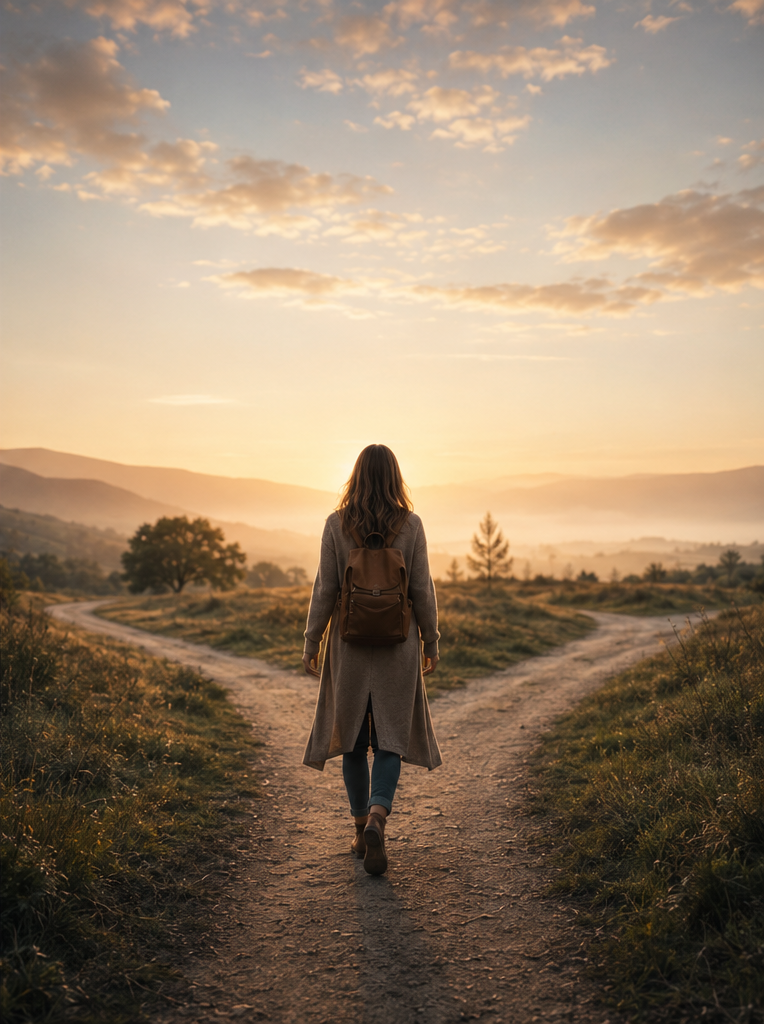
The path forward isn’t completely clear yet, but at least I’m no longer standing still.
Conclusion
The year I lived in survival mode taught me more about emotional exhaustion, decision fatigue, grief, and resilience than I ever wanted to know.
Looking back, I understand that surviving and healing are different things. Survival keeps you moving. Healing helps you recover. Both are necessary, but they aren’t the same.
If you’re currently carrying a heavy mental load, remember that exhaustion deserves attention. Grief deserves space. Rest deserves respect. None of those things are signs of weakness.
Most importantly, recovery doesn’t have to happen all at once. Small steps count. Tiny improvements matter. Progress is still progress, even when it feels painfully slow.
I’d love to hear your experience. Have you ever found yourself living in survival mode? What helped you find your way back out of it? Share your thoughts and tips in the comments—someone else might need to hear them.