Breakfast for kids on the go became a bit of a mission in our house—and not the organised, colour-coded kind either. More like sleepy mornings, half-packed school bags, and me quietly wondering how on earth I was going to get something—anything—into my daughter before a 6:30 a.m. bus.
The thing is, she just wasn’t hungry. And I get it… at that hour, I’m barely human myself. So the usual “sit down and eat your breakfast” approach? It wasn’t happening. Most mornings, she’d head out the door with nothing, and I’d have that little knot of worry sitting with me for the next few hours.
So instead of fighting it, I changed the plan.
I started thinking less about when she should eat, and more about what she might actually want later. Something small, soft, and easy to nibble on when she was ready—whether that was on the bus, or more realistically, during her first break when she finally felt like herself again.
That’s where these muffins came in. A little bit wholesome, a little bit “treat-like,” and just enough to make breakfast feel less like a chore and more like an option.
And honestly? That shift made all the difference.
Why Breakfast for Kids on the Go Can Be So Tricky (And What Actually Helps)
I didn’t realise quite how tricky breakfast for kids on the go could be until we were properly in it. At first, I thought it was just a phase—that she’d get used to the early mornings and her appetite would follow. But actually, when you’re waking up that early, your body just isn’t ready for food yet. And because of that, even the nicest breakfast can feel like too much.
Then there’s the rushing. Bags, shoes, last-minute everything… it doesn’t exactly create a calm space to sit and eat. So breakfast quietly slips down the priority list. I used to push it a bit, thinking something was better than nothing, but it often just added pressure—and didn’t really help.
At the same time, skipping breakfast does catch up with them. Maybe not straight away, but later in the morning, you can see it. Energy dips, focus fades, and everything feels a little harder. That’s the part that made me rethink things.
So instead, I started looking for what might actually work. Something small, soft, and easy. Something she could take with her and eat when she felt ready—whether that was on the bus or, more often, during her first break.
And that shift made a difference. Taking away the pressure, and letting her eat on her own time, felt more natural for both of us. It’s not perfect every day, but it’s consistent—and that’s what matters most.
Why High-Protein, Refined Sugar-Free Muffins Work So Well
And then, once I started looking into it a bit more, the science behind it actually made so much sense. It’s not just about eating something in the morning—it’s about what that something is. Protein, in particular, plays a really important role. Unlike quick sugary foods that give a fast burst of energy (and then disappear just as quickly), protein is digested more slowly, which means energy is released steadily instead of all at once.
Because of that, kids stay fuller for longer, and their energy levels don’t spike and crash in the same way. I definitely noticed that difference myself. On days where breakfast was more carb-heavy—or skipped altogether—there’d be that mid-morning slump. But when she had something with a bit of protein in it, everything just felt more… even.
There’s also something interesting happening in the brain too. Protein provides amino acids, which are needed to make neurotransmitters—the little chemical messengers that help with focus, mood, and concentration. So it’s not just about keeping them full, it’s about helping them actually function through those early lessons when they’re still waking up.
And then, when you combine that with things like oats, seeds, or a bit of healthy fat, it slows everything down even more—in a good way. Energy lasts longer, hunger stays quieter, and the whole morning feels a bit more manageable.
That’s really what I was aiming for with these muffins. Not perfection, not some ideal version of breakfast… just something small, steady, and quietly doing its job in the background.
My Go-To High-Protein Breakfast Muffin Formula
Over time, I stopped thinking of these muffins as a “recipe” and more like a simple formula I can build on. It took a lot of trial and error, a few dry disasters, and some slightly questionable early batches… but eventually I landed on something that just works. And more importantly, I understand why it works.
Oats or Oat Flour – for steady energy
Oats are my base almost every time. They’re a slow-digesting carbohydrate, which means they release energy gradually instead of causing a quick spike and crash. They also contain a type of fibre called beta-glucan, which helps keep blood sugar more stable and supports gut health. For kids especially, that steady energy makes a big difference during long school mornings.
I usually blend oats into flour when I want a softer muffin texture, or leave them whole if I want a bit more bite.
Eggs or Greek Yogurt – for protein and fullness
This is the part that really changed everything for us. Eggs and Greek yogurt are both high in protein, which helps keep kids fuller for longer and supports concentration during the morning.
Protein also plays a role in producing neurotransmitters in the brain, which are involved in focus and alertness. So it’s not just about feeling full—it’s about helping them actually function better during school hours.
Greek yogurt also adds moisture, which stops muffins from going dry, which I definitely learned the hard way after a few overly dense batches.
Banana or Applesauce – for natural sweetness and texture
Instead of refined sugar, I use ripe bananas or unsweetened applesauce. Bananas bring natural sugars, potassium, and a soft texture that makes muffins more appealing to kids who might not feel very hungry early in the morning.
Applesauce works similarly and keeps everything moist. It also allows me to reduce added sweeteners without the muffins tasting bland.
Chia Seeds – for fibre, omega-3s, and slow energy release
Chia seeds were a bit of a game-changer for me. They absorb liquid and form a gel-like texture in baking, which helps keep muffins soft and moist.
Nutritionally, they’re packed with fibre, which supports digestion and helps keep energy levels stable throughout the morning. They also contain omega-3 fatty acids, which are important for brain health and focus in children.
And honestly, they just make the muffins feel a bit more “complete,” like they’re doing more than just filling a gap.
Nuts (Almonds, Walnuts) – for healthy fats and staying power
I add chopped almonds or walnuts whenever I can. Nuts provide healthy fats, which slow down digestion and help keep kids fuller for longer. They also add vitamin E, magnesium, and additional protein.
Almonds bring a mild crunch, while walnuts have more omega-3 content, so I tend to rotate depending on what I have in the cupboard.
The Result: Balanced, Steady Energy
Once I started combining these elements consistently, I noticed the difference—not just in how long the muffins kept her full, but in how steady her mornings became. No sugar crashes, no mid-morning exhaustion, just something simple that carries her through until her first proper break.
It’s not complicated, but it works. And in busy school mornings, that’s really all I need.
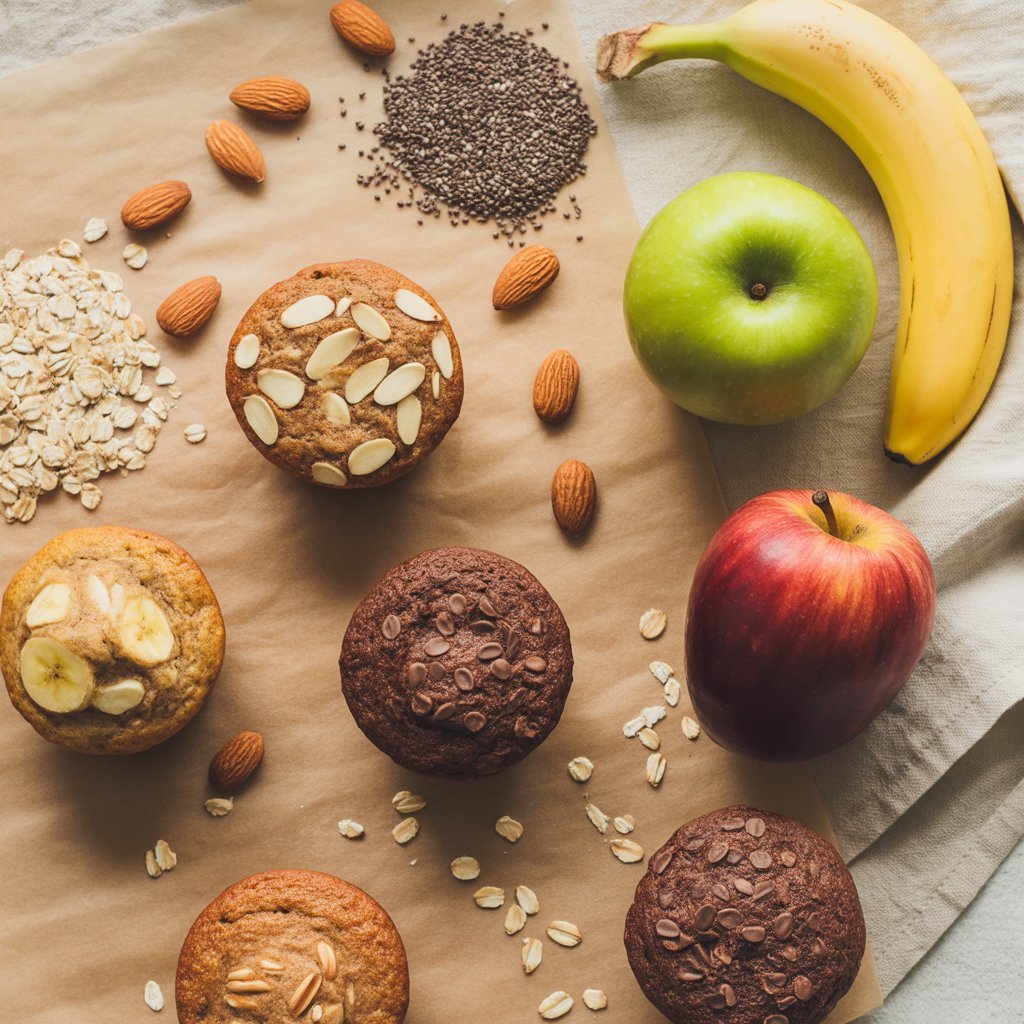
Banana Almond Protein muffins

Banana Almond Protein Muffins

Ingredients
- 2 Bananas ripe
- 2 Eggs room temperature
- 120 g Greek yoghurt
- 60 ml Maple syrup
- 1 tsp Vanilla extract
- 120 g Oats fine
- 50 g Almonds ground
- 1 tsp Baking powder
- 1/2 tsp Baking soda
- 1 tsp Chia seeds
- 1/2 tsp Cinnamon optional
- 40 g Almonds chopped, optional
- 30 g Dark chocolate chips optional
Instructions
- Preheat oven to 180°C (350°F) and line a muffin tray.
- Mash bananas in a large bowl until smooth.
- Whisk in eggs, Greek yogurt, maple syrup, and vanilla extract.
- In a separate bowl, mix oat flour, ground almonds, baking powder, baking soda, and chia seeds.
- Combine wet and dry ingredients until just mixed.
- Fold in chopped almonds and optional dark chocolate chips.
- Spoon mixture into muffin cases.
- Bake for 18–22 minutes, or until golden and a skewer comes out clean.
- Allow to cool before storing.
Notes
Notes & Tips
- Naturally sweet from banana—maple syrup can be slightly reduced if preferred
- Dark chocolate adds a “treat feel” kids often love
- Don’t overmix or muffins may become dense
- Very ripe bananas = softer, sweeter muffins
Storage
- Room temperature: 1–2 days in airtight container
- Fridge: Up to 4 days
- Freezer: Up to 3 months
Apple cinnamon chia muffins
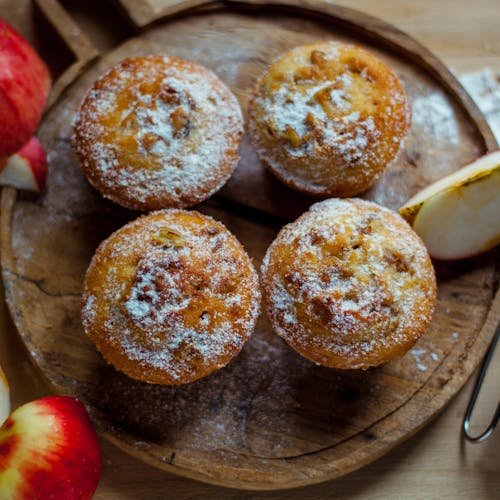
Apple Cinnamon Chia Muffins
Ingredients
- 120 g Applesauce unsweetend
- 1 Apple small
- 2 Eggs
- 80 g Greek yoghurt
- 100 ml Milk of any kind
- 100 g Oats fine
- 1 tsp Baking powder
- 1/2 tsp Baking soda
- 1 tsp Cinnamon
- 2 tbsp Chia seed
- 40 g Almond or Pecans chopped
- 30 g white chocolate chips or raisins
Instructions
- Preheat oven to 180°C (350°F) and line a muffin tray.
- Finely dice the apple (small pieces work best for texture).
- In a bowl, whisk together eggs, Greek yogurt, milk, and applesauce.
- In a separate bowl, mix oat flour, cinnamon, baking powder, baking soda, and chia seeds.
- Combine wet and dry ingredients until just mixed (don’t overwork the batter).
- Fold in diced apple, nuts, and optional dark chocolate chips.
- Spoon into muffin cases evenly.
- Bake for 18–22 minutes until golden and a skewer comes out clean.
- Cool fully before storing.
Notes
Notes & Tips
- Dice apple very small so muffins hold together better
- Cinnamon deepens flavour and naturally enhances sweetness
- Applesauce keeps muffins soft and moist
- Chia seeds absorb moisture and help with steady energy release
- Optional white chocolate or raisins gives a slightly more “treat-like” version for picky eaters
Storage
- Room temperature: 1–2 days in airtight container
- Fridge: Up to 4 days
- Freezer: Up to 3 months
Chocolate Beetroot Protein muffins

Chocolate Beetroot Protein Muffins (with Dates & Walnuts)
Ingredients
- 150 g Beetroot finely grated or blended
- 60 g Dates soft, blended
- 60 ml Maple syrup
- 2 Eggs
- 100 g Greek yoghurt
- 80 ml Milk of any kind
- 120 g Oats fine
- 40 g Cacao powder unsweetened
- 1 tsp Vanilla essence
- 1 tsp Baking powder
- 1/2 tsp Baking soda
- 2 tbsp Chia seeds
- 40 g Walsnuts chopped
- 30 g dark chocolate chips
Instructions
- Preheat oven to 180°C (350°F) and line a muffin tray.
- Blend or finely grate the cooked beetroot until smooth.
- In a bowl, mix beetroot, blended dates, maple syrup, eggs, Greek yogurt, milk, and vanilla extract.
- In another bowl, combine oat flour, cocoa powder, baking powder, baking soda, and chia seeds.
- Mix wet and dry ingredients until just combined (don’t overmix).
- Fold in chopped walnuts and optional dark chocolate chips.
- Spoon into muffin cases evenly.
- Bake for 20–25 minutes, until set and slightly springy.
- Allow to cool fully before storing.
Notes
Notes & Tips
- Beetroot adds natural sweetness, moisture, and a soft texture (kids never notice it once blended well)
- Dates replace refined sugar and give a caramel-like depth
- Walnuts add healthy fats for longer-lasting energy
- Chia seeds help bind moisture and support steady energy release
- These taste even better the next day once flavours settle
Storage
- Room temperature: 1–2 days
- Fridge: Up to 4–5 days
- Freezer: Up to 3 months
Conclusion
At the end of the day, breakfast for kids on the go doesn’t need to be perfect—it just needs to work for your family. That’s really what I’ve learned through all of this. Some mornings are smooth, others are chaos, and honestly… both are normal.
If there’s one thing I’d say to anyone trying these muffins, it’s this: keep it simple and don’t overthink it. One of the most common mistakes I made early on was trying to make everything “too healthy” at once—too much fibre, not enough moisture, no natural sweetness—and the result was always the same… muffins that looked great but nobody wanted to eat. Another mistake was overmixing the batter (I still catch myself doing it sometimes), which can make them dense instead of soft.
Also, don’t worry if your child doesn’t eat them straight away. That used to stress me out so much. But now I’ve realised it still counts if they eat it later in the morning, or even after school. It’s all part of finding a rhythm that fits your real life, not an ideal one.
And if you’re enjoying this kind of healthier, make-ahead approach, you might also like my beetroot protein balls—they’ve become another little staple for us on busy days. You can find them here: Protein Energy balls
So take what works, leave what doesn’t, and don’t be afraid to adjust things as you go. That’s really where the magic happens.