For me the question how to bring Mindfulness into everyday life wasn’t something I went looking for—it sort of found me, quietly, in the middle of everything changing.
“Wherever you are, be there totally.” That quote stayed with me, even when I didn’t quite know what to do with it.
During lockdown, life slowed in a way I hadn’t experienced before. We were living in the countryside, with a farm to wander through, space to breathe, and time that didn’t feel so tightly held. The children were home, the days were simple, and in many ways, we were okay—more than okay, really. There was a kind of unexpected peace to it all.
But afterwards… everything sped up again. Almost overnight.
It felt like the world was trying to make up for lost time. Schedules filled, pressure crept back in, and the quiet we’d been wrapped in slowly slipped away. The financial worries returned too, louder than before, and I could feel myself being pulled back into that familiar rush—always thinking ahead, always trying to keep up.
And somewhere in the middle of that, I realised how much I missed the stillness.
Not the situation, not the uncertainty—but the feeling of being present. Of noticing small things. Of not constantly racing to the next moment.
That’s where mindfulness began for me—not as a perfect practice, not as long meditations, but as a gentle attempt to bring a little of that calm back into ordinary days.
In this guide, I’ll share simple, realistic ways to practice mindfulness in everyday life—no pressure, no perfection. Just small, steady moments of awareness that help you feel a little more here, a little more grounded, exactly where you are.



What Is Mindfulness in Daily Life? (Simple Explanation)
I used to think mindfulness was something you had to set aside time for. You know, sitting cross-legged in a quiet room, trying very hard not to think… which, ironically, made me think even more.
But over time, I realised mindfulness isn’t really about that at all.
Instead, at its core, it’s simply this: paying attention to what’s happening right now, without rushing past it or judging it too much. It sounds so simple, doesn’t it? And yet, in practice, it can feel surprisingly difficult.
For me, it began in small, almost forgettable moments. For example, going for a walk and, little by little, really seeing the trees instead of just passing them by. At first, it felt a bit unusual… like I was slowing down while everything else around me kept speeding up.
And if I’m honest, I often thought I was doing it wrong.
Because, of course, my mind would wander. Constantly. I’d start focusing on my breath, and then, within seconds, I’d be planning dinner or replaying a conversation from days ago. However, that wandering? That’s actually part of it. Mindfulness isn’t about having a perfectly quiet mind. Rather, it’s about noticing when your attention drifts and gently guiding it back again.
So, in that sense, there’s a quiet difference between mindfulness and what I once believed meditation had to be. Meditation can be a dedicated time to practise. Meanwhile, mindfulness is something you can softly weave into the life you’re already living.
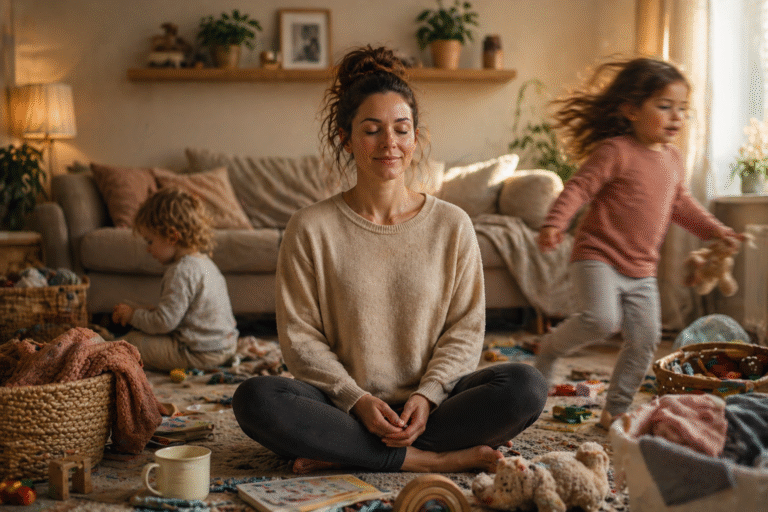
It might happen while you’re drinking your morning coffee, brushing your teeth, or even listening—really listening—to your child tell you a story you’ve heard before. In those moments, you’re choosing, even briefly, to be fully there.
No big ritual. No perfect conditions.
Just you, the moment, and a gentle return to noticing.
Benefits of Practicing Mindfulness Daily
At first, I thought mindfulness would just make me feel calmer. And it did, in small ways. I noticed I wasn’t reacting as quickly to stress. There was a pause where there hadn’t been one before, and that alone made busy days feel a little more manageable.
Over time, I also felt more patient. Not all the time, of course, but enough to notice. I wasn’t as quick to snap or shut down, and even my focus improved. I could stay with one task a bit longer without my mind pulling me in ten directions. Even sleep softened slightly—my thoughts still wandered, but they didn’t spiral as much.
But then something deeper started to shift.
As I became more present, I started to see things more clearly. What I liked, what I didn’t, and how I actually wanted my life to feel. And if I’m honest, that part wasn’t easy. It made me realise how much tension and unhappiness I had been surrounded by, almost without questioning it.
There were patterns I had accepted for years. Stress, arguments, a constant feeling of something not being quite right.
And yet, alongside that awareness came something unexpected—a quiet kind of bravery. Instead of feeling stuck in it all, I began to feel like I had a choice.
That’s what led to real change. After 15 years in a job that wasn’t giving me the joy or financial support I needed, I finally admitted it to myself… and then I did something about it.
So yes, mindfulness can bring calm, better focus, even a little more ease. But sometimes, its biggest gift is helping you see clearly—and giving you the courage to change what no longer fits.
How to Practice Mindfulness in Daily Life (Beginner-Friendly Techniques)
This is the part I used to overthink the most. I thought I needed the perfect routine, the right time of day, maybe even a quiet house (which… rarely happens). But actually, mindfulness in daily life started working for me when I stopped trying to make it a “thing” and just wove it into what I was already doing.
The easiest place to begin is with your breath. Nothing fancy—just noticing it. I’d be standing in the kitchen, waiting for the kettle to boil, and instead of grabbing my phone, I’d take a few slow breaths and actually feel them. It sounds small, and it is… but it’s also where everything starts.
From there, I began using what I call little “anchor moments.” Things I do every single day—making coffee, brushing my teeth, walking to the car. Instead of rushing through them, I’d slow down just slightly and pay attention. The smell of the coffee, the feeling of the floor under my feet, the sound of the water running. Not every time, not perfectly… but enough to notice a shift.
Another thing that helped was focusing on just one task at a time. I used to pride myself on multitasking, but really, I was just half-doing everything. So I started small—if I was washing dishes, I was just washing dishes. Mind wanders (because it will), and then gently bringing it back again.
And on days when everything feels chaotic, I keep it even simpler. Just noticing something around me—what I can see, hear, or touch. It grounds you in a way that’s hard to explain until you feel it.
There’s no perfect way to do this. Just small moments, gently noticed, throughout your day.
5-Minute Mindfulness Exercises You Can Do Anywhere
I used to think five minutes wouldn’t really do anything. It felt too small, too easy to matter. But over time I realised it’s not about the length of time—it’s about the pause it creates in your day. A small break from the noise.
And honestly, these little exercises became my “reset buttons” when everything felt a bit much.
5-Minute Breathing Reset
This is the one I come back to most often. I just sit wherever I am, even if it’s the kitchen chair, and focus on my breath. In… and out. That’s it. My mind wanders constantly, and I used to think I was doing it wrong because of that. But I’m not. I just gently bring it back each time. It’s simple, but it settles something inside me.
Body Scan (Release Tension in Minutes)
This one surprised me. You slowly move your attention through your body—shoulders, jaw, hands, stomach—and just notice what’s going on. I didn’t realise how much tension I was holding until I started doing this. Especially in my shoulders. Sometimes I don’t even fix it, I just notice it… and somehow that’s enough to soften it a little.
5-4-3-2-1 Grounding Exercise
This is my go-to when everything feels overwhelming. You look around and name:
5 things you can see
4 things you can feel
3 things you can hear
2 things you can smell
1 thing you can taste
It pulls you straight out of your head and back into the room you’re actually in. It sounds almost too simple, but it works.
Mindful Walking
No special place needed. Just walking slowly and noticing your steps. The feeling of your feet on the ground, the rhythm of your body, the air around you. I often do this without even planning it—it just happens when I stop rushing.
Simple Awareness Pause
Sometimes I don’t do anything structured at all. I just stop for a moment and notice what’s around me—the light, the sounds, the feeling of the moment I’m in. No fixing, no changing. Just noticing.
Five minutes doesn’t change everything. But it does something just as important—it brings you back to yourself, even in the middle of a busy day.
Mindfulness for Busy Days (How to Stay Present When Life Is Chaotic)
Busy days used to be the point where I’d completely drop any kind of mindfulness. Everything felt too loud, too rushed, too full. And I used to think, “There’s just no space for this today.”
But then I started doing something a bit strange… I began using everyday “waiting moments” as little anchors.
One of my favourites was the kettle. I’d switch it on, and instead of walking away and grabbing my phone or rushing to the next task, I’d just stand there. Right next to it. It sounds almost too simple, but I’d use those few minutes as a kind of reset.
I’d feel my feet on the floor. Notice my breath. Sometimes I’d look out the window and actually see the sunlight coming in instead of just registering it in the background. Other times I’d listen to the quiet hum of the kitchen and just… pause.
Not fixing anything. Not analysing anything. Just being there for a moment.
At first it felt a bit awkward, like I should be doing something more useful. But slowly, it became one of the easiest ways to bring myself back when the day felt like too much.
And it doesn’t have to be the kettle. It could be waiting for toast, standing at the sink, or even before replying to a message. Those tiny pauses become little “check-ins” with yourself.
Some days I still forget, of course. I rush, I react, I move too fast. But I’ve learned that mindfulness on busy days isn’t about stopping life—it’s about finding small pockets inside it where you can simply come back to yourself, even for a few seconds.
Common Mindfulness Mistakes Beginners Make
When I first started with mindfulness in everyday life, I honestly thought I was just “bad at it.” Turns out… I wasn’t doing it wrong. I just had a few very common misconceptions that a lot of people run into.
Trying to empty the mind completely
This was my biggest mistake. I thought mindfulness meant having a completely quiet mind—no thoughts, just stillness. But that’s not how it works. My mind always thinks, jumps, plans, worries… that’s just what it does. The practice is noticing those thoughts, not stopping them.
Expecting instant calm or big results
I expected to feel peaceful straight away, like flipping a switch. And when I didn’t, I assumed it wasn’t working. But mindfulness is much more subtle than that. Sometimes the “result” is just noticing you’re overwhelmed a second earlier than usual. That’s still progress.
Being too hard on yourself
I used to judge myself constantly. “You’re not doing this right,” or “you keep forgetting.” But that pressure actually made it harder. Now I try to treat it more gently. If I forget all day, I just start again. No drama.
Thinking it has to be a formal practice
I used to believe I needed a cushion, silence, perfect timing. But most of my mindfulness now happens in ordinary moments—waiting for the kettle, walking, washing dishes. Real life is the practice.
Giving up too quickly
This one is so common. Because it doesn’t feel dramatic at first, it’s easy to assume it’s not working. But mindfulness builds quietly over time. You don’t always notice it happening until one day you realise you’re a little calmer than before.
Mistakes aren’t really failures here—they’re just part of learning how to come back to yourself, again and again.
How to Build a Simple Daily Mindfulness Routine
When I first tried to build a mindfulness routine, I made it way too complicated. I thought I needed long sessions, silence, and a perfect schedule. But real life doesn’t really work like that, does it?
What actually worked for me was something much smaller—and much more realistic.
For me, it started with making tea. I drink quite a few cups of herbal tea during the day, so it became an easy anchor point. I made a simple rule for myself: when the kettle is boiling, I close my eyes or just stand still and don’t do anything else. No phone, no dishes, no quick distractions. Just those few minutes of waiting.
At the beginning, I only managed it once, maybe twice a day. And even that felt like a lot. Because there’s always something pulling your attention—dishes to clear, a message to check, something to quickly sort out. I didn’t realise how often I was constantly “doing” until I tried to stop for even a minute.
But slowly, it became easier.
Once that felt more natural, I didn’t add anything big or dramatic. Instead, I simply chose another small moment in my day. My evening facial routine became the next one. Same idea—no rushing, no multitasking, just being there while I did it.
And that’s really how it grew for me. Not as one long practice, but as little pockets of awareness scattered through the day.
I started stacking these moments gently, one at a time, instead of trying to change everything at once. And that made it feel doable—even on busy, messy days where everything else is still going on around you.
Conclusion
Mindfulness in daily life isn’t about escaping reality—it’s about finally being in it. Fully, honestly, and without rushing past it.
You don’t need long meditation sessions or a perfect routine to begin. Just small moments. A breath. A pause. A quiet awareness while life unfolds around you.
Start simple. Maybe it’s your morning coffee, maybe it’s a walk, maybe it’s just noticing your breath right now.
And over time, those tiny moments? They add up to something powerful—more calm, more clarity, and a life that feels a little less rushed.
✨ If you’ve tried mindfulness before (or struggled with it), I’d genuinely love to hear—what worked for you? What didn’t? Share your experience.