Chamomile has always felt like one of those plants that quietly finds its way into your life. Not loudly, not all at once — but gently, in cups of tea, in soft evenings… usually at the exact moment you realise you might be just a tiny bit more stressed than you thought. When you begin to explore the types of chamomile, though, you start to see there’s more going on beneath that calm, unassuming surface. What looks like a simple little daisy quickly turns out to have opinions — different varieties, different ways of growing, and slightly different personalities (some more well-behaved than others, naturally).
And yet, they all seem to carry that same thread of calm.
For centuries, chamomile has been gathered and used across cultures — from the sun-warmed gardens of ancient times to kitchen tables where tea is poured at the end of a long day. Its name, often said to mean “ground apple,” makes perfect sense the first time you crush a flower between your fingers and catch that soft, almost sweet scent.
Still, what makes chamomile so enduring isn’t just its history. It’s the way it fits so easily into everyday life. It grows without much fuss, forgives the occasional bit of neglect, and somehow still manages to show up exactly when you need it.
So before we get into how to grow it, or which one to choose, it’s worth pausing here for a moment.
Because chamomile isn’t just a plant.
It’s a small, quietly reliable companion — the kind that doesn’t mind if you forget about it for a day or two, and is still there, ready to offer a little calm when you remember.
German Chamomile — The One You’ll Most Likely Make Tea From
What it looks like
If you’ve ever had a cup of chamomile tea that felt soft, calming, and quietly comforting, chances are it came from German chamomile. This is the one that actually does the job — the dependable friend of the chamomile world. The one that shows up, does what it promises, and doesn’t make a fuss about it.
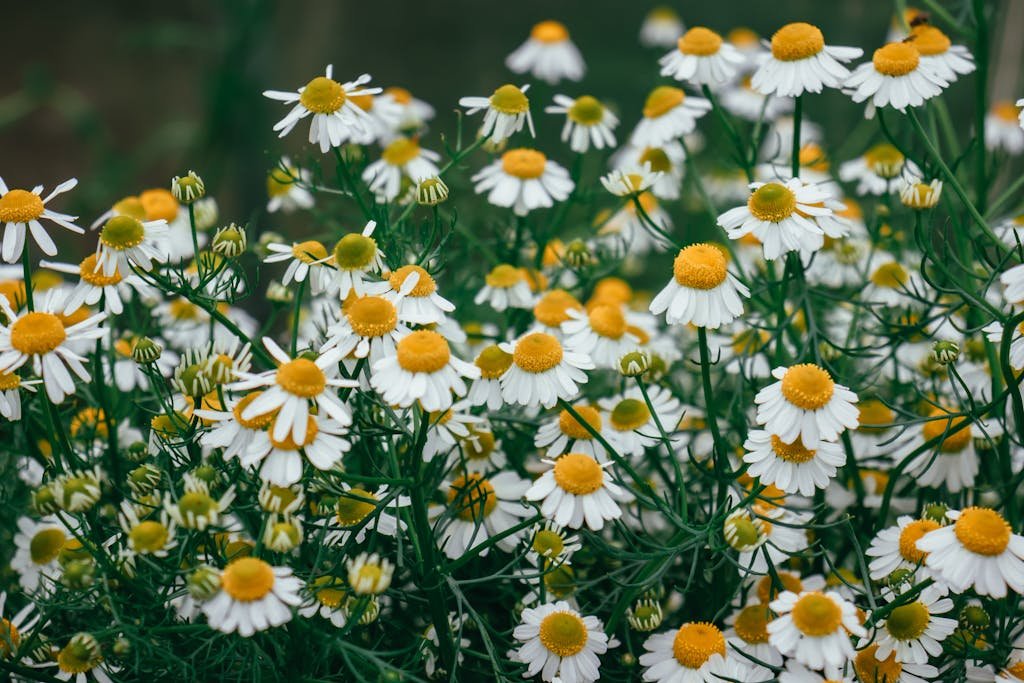
At first glance, it doesn’t look like much. Just a scattering of small, daisy-like flowers on tall, slightly wispy stems, swaying about as if they’ve nowhere urgent to be. But look a little closer and there’s a quiet kind of beauty there — simple, unbothered, and very much doing its own thing.
There’s also a small detail that gives it away. If you gently split the flower head, the centre is hollow. A tiny, almost secret feature — but once you know it, you’ll never unsee it. (And yes, you may find yourself casually checking flowers just to feel certain. Completely normal behaviour.)
Why its loved (and used so often)
When it comes to use, this is where German chamomile really earns its place. The flowers are dried for tea, known for calming the nervous system, easing digestion, and helping you drift a little closer to rest. It’s the cup you reach for when the day has been long, your thoughts won’t quite settle, and you’re hoping for something — anything — to take the edge off.
Growing it is, thankfully, just as gentle.
As an annual, it lives fast and gives generously, but it often reseeds itself, quietly returning the following year as if it had been there all along. It prefers a sunny spot and light, well-drained soil, and its seeds like to sit on the surface rather than be tucked away — a small reminder that not everything needs to be buried to grow.
Once it’s settled in, it doesn’t ask for much. In fact, it tends to do better when you step back a little. Overwatering, overthinking, over-managing — none of that is required here.
And maybe that’s why it feels so fitting.
A plant that thrives without pressure, grows without hurry, and offers calm without asking for anything in return… feels like something we could all learn from, in our own small way.
Roman chamomile — The one that stays
If German chamomile is the one you gather and dry, then Roman chamomile is the one that settles in and makes itself at home. It doesn’t rush, it doesn’t reach too high — instead, it spreads slowly, quietly, as if it’s in no particular hurry to be anything other than what it is.
And in many ways, that’s exactly its charm.
How to Recognise It
At first glance, it still carries that familiar chamomile look — small white petals, a soft yellow centre — but then you notice the difference.
It grows low to the ground, forming a kind of gentle carpet rather than stretching upwards. The leaves are finer, almost feathery, and when you brush past them, they release that same soft, apple-like scent.
And unlike German chamomile, the centre of the flower is solid. A small detail, perhaps, but one that quietly sets it apart.
Where It Shines
Rather than being gathered for tea, Roman chamomile is often grown for where it lives.
It works beautifully as a ground cover, softening the edges of paths, filling in spaces, even forming chamomile lawns that can be lightly walked on. There’s something lovely about that — a plant that invites you to step closer, rather than keeping its distance.
It’s also used in oils and skin preparations, valued for its gentle, soothing qualities. Not quite as strong in tea, but still carrying that same sense of calm in a different form.
Growing It Gently
Because it’s a perennial, Roman chamomile stays with you. Once planted, it returns year after year, slowly spreading if it’s happy where it is.
It prefers a sunny spot, though it will tolerate a little shade, and like most chamomile, it doesn’t ask for rich soil — in fact, it’s often better off without it. Well-drained soil is key, and once established, it’s surprisingly resilient.
Over time, it can be lightly trimmed to keep its shape, especially if you’re using it as ground cover. But even then, it doesn’t demand much attention.
It’s not a plant that needs managing.
More one that simply… settles in.
A Different Kind of Calm
And perhaps that’s the real difference here.
Where German chamomile offers calm in a cup, Roman chamomile offers it in a space. In the way it grows, the way it softens a path, the way it quietly fills the gaps without asking for recognition.
It’s less about doing, and more about being.
And sometimes, that’s exactly what’s needed.
Pineapple chamomile — The Wild One you didn’t expect
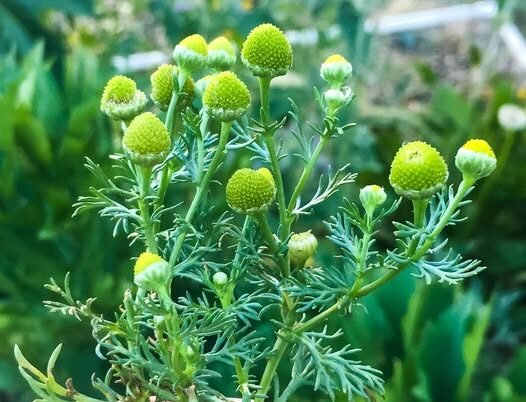
is the kind of plant that doesn’t wait for permission. One day it’s simply there — tucked into a path, edging a garden bed, or appearing in a patch of ground you’re fairly sure you didn’t plant anything in. And yet… there it is.
Already settled. Already staying.
It also breaks a few expectations straight away. There are no white petals here, just small, cone-shaped yellow-green heads that look almost unfinished at first glance. But then you lean in a little closer, and the scent gives it away — soft, slightly sweet, with a clear hint of pineapple that makes you pause for a second because you weren’t expecting that at all.
How to Recognise It
Once you know what you’re looking for, it becomes quite distinctive.
It grows low and unassuming, often blending into the ground around it. The leaves are finely divided, almost delicate, and the flower heads sit close to the soil rather than standing tall and showy like its more familiar relatives.
And then there’s that scent. Crush a small part between your fingers and it releases something surprisingly fruity and gentle — a little reminder that not everything in the garden follows the same rules.
Where It Tends to Appear
You usually don’t plant pineapple chamomile in a formal sense. It finds its own way in.
It shows up in compacted soil, along paths, in disturbed ground — anywhere it can quietly settle without much competition. In that sense, it behaves more like a wild guest than a planted herb.
And once it’s there, it tends to stay. It self-seeds easily and returns without much effort from you, often in the same quiet corners it found the first time.
What It’s Used For
People don’t rely on pineapple chamomile as much as German chamomile for tea, but it still has its place.
You can use it in light herbal infusions, especially when you want something gentle with a slightly fruity edge. It carries a softer calming quality — not as strong or structured, but still soothing in its own way.
Most of its use comes from traditional foraging, where it’s gathered in small amounts rather than cultivated in large beds.
A Quiet Kind of Wildness
is the kind of plant that doesn’t wait for permission. One day it’s simply there — tucked into a path, edging a garden bed, or appearing in a patch of ground you’re fairly sure you didn’t plant anything in. And yet… there it is.
Already settled. Already staying.
It also breaks a few expectations straight away. There are no white petals here, just small, cone-shaped yellow-green heads that look almost unfinished at first glance. But then you lean in a little closer, and the scent gives it away — soft, slightly sweet, with a clear hint of pineapple that makes you pause for a second because you weren’t expecting that at all.
How to Recognise It
Once you know what you’re looking for, it becomes quite distinctive.
It grows low and unassuming, often blending into the ground around it. The leaves are finely divided, almost delicate, and the flower heads sit close to the soil rather than standing tall and showy like its more familiar relatives.
And then there’s that scent. Crush a small part between your fingers and it releases something surprisingly fruity and gentle — a little reminder that not everything in the garden follows the same rules.
Where It Tends to Appear
You usually don’t plant pineapple chamomile in a formal sense. It finds its own way in.
It shows up in compacted soil, along paths, in disturbed ground — anywhere it can quietly settle without much competition. In that sense, it behaves more like a wild guest than a planted herb.
And once it’s there, it tends to stay. It self-seeds easily and returns without much effort from you, often in the same quiet corners it found the first time.
What It’s Used For
People don’t rely on pineapple chamomile as much as German chamomile for tea, but it still has its place.
You can use it in light herbal infusions, especially when you want something gentle with a slightly fruity edge. It carries a softer calming quality — not as strong or structured, but still soothing in its own way.
Most of its use comes from traditional foraging, where it’s gathered in small amounts rather than cultivated in large beds.
A Quiet Kind of Wildness
There’s something quite likeable about it, really.
It doesn’t aim for neat rows or controlled growth. This little flower doesn’t try to look ornamental or important. It just… arrives, grows where it can, and quietly does its thing without asking for attention.
And maybe that’s why it stands out.
Because even in a carefully planned garden, it reminds you that some of the most interesting plants are the ones you didn’t plan for at all.
Other Chamomile Relatives (And Why They’re Different)
Not everything that gets called “chamomile” actually belongs in your cup. Some of these plants look the part at first glance, but once you spend a bit of time with them, you realise they’re playing a completely different role in the garden. And that’s worth knowing before you go drying handfuls for tea.
Dyer’s chamomile is a good example. It brings bright, golden flowers and works beautifully as an ornamental plant, especially if you want colour and pollinators in the garden. People also use it traditionally for natural dyeing, which suits it far better than anything involving a teapot.
Then you have Corn chamomile, which often shows up as a wildflower in fields and disturbed ground. It looks similar from a distance, but it doesn’t carry the same gentle medicinal reputation. It’s more of a passer-by in the chamomile family — interesting to see, but not one you’d reach for in herbal use.
And this is really the key point: chamomile isn’t just one plant, and not everything labelled chamomile will give you the same calming effect you’re probably looking for. Once you start recognising the differences, it becomes much easier to choose the right one for tea, for the garden, or simply for enjoying as it is.
Harvesting and Drying Chamomile
With chamomile, timing makes all the difference. You want to harvest when the flowers are fully open and at their freshest, usually on a dry morning after the dew has lifted. That’s when the plant holds the most scent and the strongest of its gentle properties.
German chamomile responds especially well to regular picking. In fact, the more you harvest, the more it tends to flower, which feels like a very fair exchange for such a small bit of effort.
How to Pick the Flowers
You don’t need anything complicated here. Just use your fingers or small scissors and snip the flower heads cleanly. Try to take just the blooms and leave as much of the stem behind as possible, especially if you want the plant to keep producing.
Check the plants every couple of days during peak season. Chamomile doesn’t open all at once, so you’ll always find a mix of fully open flowers and buds still catching up. The best ones for harvesting sit fully open, flat, and bright, while tighter buds need a little more time.
When and How Often to Harvest
Once chamomile settles in, it keeps giving for weeks. You can harvest little and often, which works far better than waiting and cutting everything at once. It keeps the plant producing and encourages more blooms to follow.
If you’re growing it in a garden you pass through often, it becomes a quiet habit — a few flowers here, a few there — almost like the plant invites you to keep checking in.
Drying Chamomile for Later Use
Once you’ve harvested your flowers, the next step matters just as much as the picking.
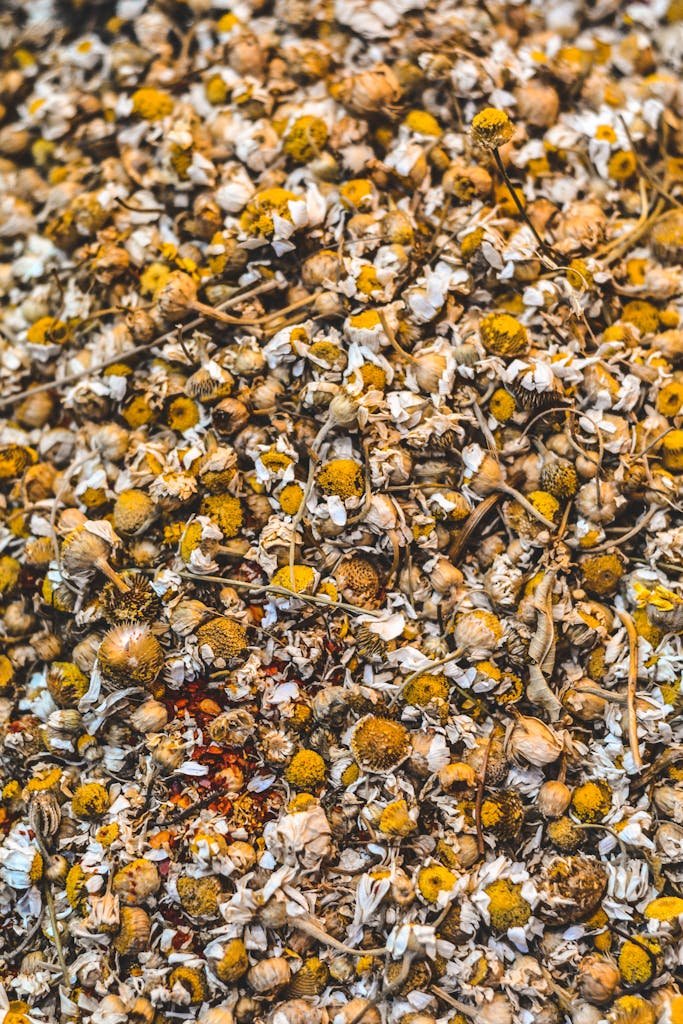
Spread the flower heads out in a single layer on a clean tray, cloth, or drying rack. Keep them somewhere warm, dry, and out of direct sunlight so they hold their colour and aroma. Airflow helps here, so avoid stacking them or crowding them together.
Let them dry slowly over several days until they feel crisp and light to the touch. Once they reach that stage, store them in an airtight jar away from heat and light. A dark cupboard works perfectly.
Properly dried chamomile keeps its scent surprisingly well, and every time you open the jar, it brings that same soft, calming feeling back — long after the garden has finished its work for the season.
A Quiet Plant That Gives More Than It asks for
Chamomile doesn’t really try to impress you, and maybe that’s exactly why it does. It doesn’t demand perfect soil, constant attention, or careful planning. Instead, it just grows — quietly, steadily — and offers something back without making a big show of it.
Whether it shows up as German chamomile in your tea cup, spreads gently through the garden as Roman chamomile, or surprises you as a little wild patch you didn’t plant at all, it always seems to bring the same feeling with it. A kind of soft pause. A small reminder to slow down, even if only for a moment.
And perhaps that’s the real reason chamomile has stayed with people for so long. Not because it’s rare or complicated, but because it fits so easily into everyday life. You don’t need a perfect garden or a perfect routine. You just need a small space, a bit of light, and the willingness to let something simple grow.
So when you look at chamomile now, whether it’s growing quietly in the garden or sitting dried in a jar on your shelf, it starts to feel less like just another herb and more like something you can actually turn to. Something steady. Something simple. And if you’re ever needing that moment of pause, you can bring it straight into a cup — like in my calming tea recipe for overwhelm — where all of this softness, calm, and quiet work comes together in one small ritual.