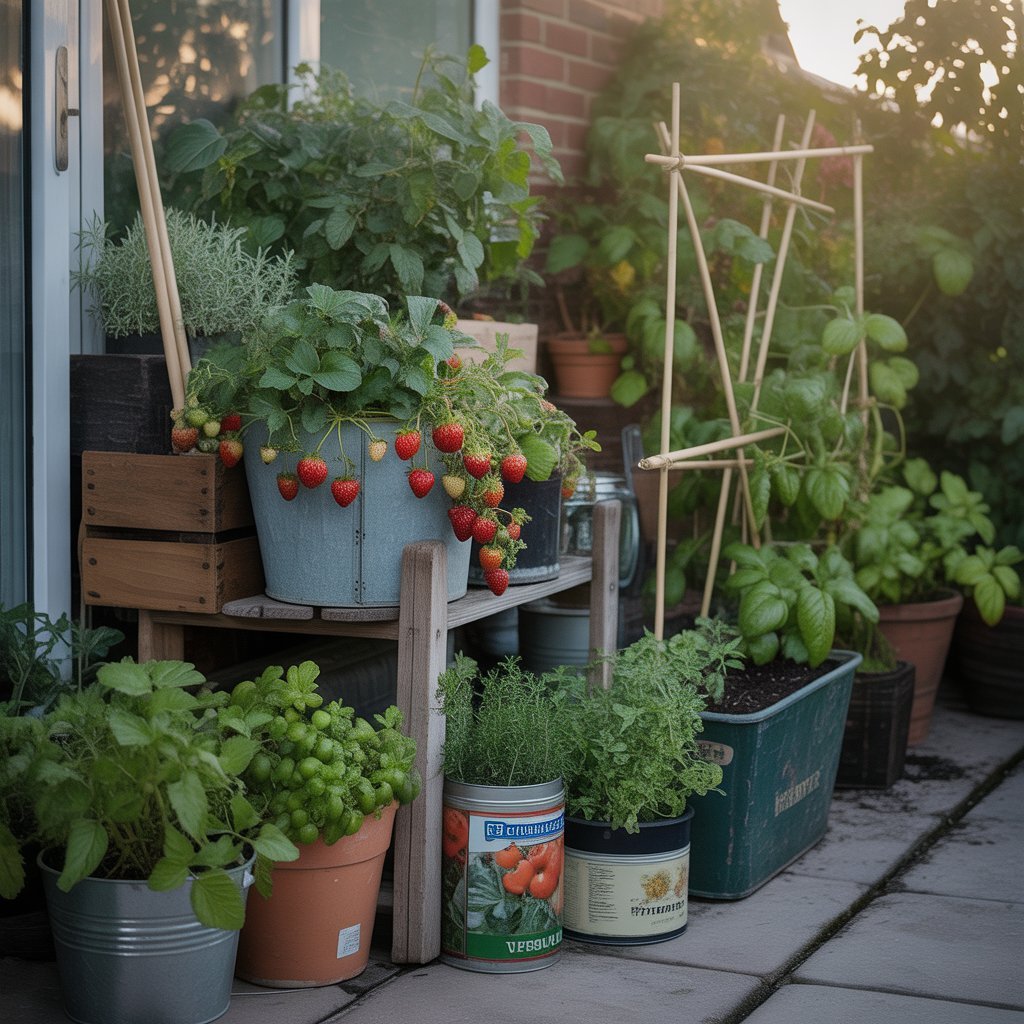
Vegetable garden in containers wasn’t exactly a grand plan—it was more of a “well… this will have to do” moment that somehow turned into something I’ve grown quite fond of.
We’re in a bit of a transition season. This house isn’t forever (my uncle has plans to sell), so the idea of digging in proper garden beds felt a bit like writing your name in wet sand just before the tide rolls in. For years, planting a garden meant commitment—roots in the ground, a quiet promise that we’d be staying put. But now? It’s time to loosen that grip a little.
Still, not growing anything this year was never an option. That would’ve felt far worse. So instead, I went hunting—proper scavenger style. The house is big, and before I spent a cent, I wandered from shed to corner to cupboard, collecting anything that could vaguely pass as a container. Some pots are old, a bit cracked, and questionably shaped. Others are new and far too nice for what I’m putting them through. Together, they make a garden that’s… let’s call it eclectic.
It’s been an adjustment, though. Going from a farm, where space was never an issue, to this—where I’m suddenly thinking about root space, airflow, and how many courgette plants we actually need (turns out, fewer than I thought). But in a strange way, this garden fits exactly where I am right now: flexible, movable, and just a little bit chaotic.
Why Container Gardening Works (Even for Full Vegetable Gardens)
I’ll be honest—at first, I didn’t quite believe a vegetable garden in containers could ever feel… enough. It seemed like a compromise. Something you do when you can’t have a “real” garden. However, over time, and after a few surprisingly generous harvests, I started to see it differently. In fact, container gardening doesn’t just work—it solves a lot of problems you don’t even realise you had.
For one thing, everything becomes far more manageable. Instead of battling questionable soil (which, let’s face it, has betrayed me more than once), you’re in control from the start. You choose the potting mix, you manage the drainage, and therefore, your plants get a much better chance at thriving. Also, there’s something deeply satisfying about knowing exactly what your vegetables are growing in—no surprises lurking underneath.
Then, there’s the flexibility, which I didn’t think I’d appreciate as much as I do. If a plant isn’t happy where it is, you can simply… move it. More sun? Slide it over. Too windy? Tuck it in closer to the wall. As a result, it’s gardening with a bit of freedom, which feels oddly comforting when everything else is a little up in the air.
On top of that, there are fewer weeds to deal with. I mean, not none (I wish), but definitely fewer. Pests can still show up, of course—they always do—but because everything is contained, it’s easier to spot issues early and deal with them before they turn into a full-blown disaster.
So, while it might look like a patchwork of pots and slightly mismatched containers (mine certainly does), it works. And more than that, it grows—beautifully, generously, and sometimes even better than expected.
Choosing the Right Containers for Vegetable Gardening
I’ll admit, I still underestimated this part at the beginning. I knew, of course, that different plants need different root space—we had the farm, after all—but somehow I assumed containers would be a bit more forgiving. Just pop things into whatever I had lying around and hope for the best. As it turns out, containers have their own rules… and they’re not shy about enforcing them.
Getting the Size Right (Especially for Tomatoes)
Size is one of those things that quietly makes or breaks your vegetable garden in containers. Tomatoes, in particular, reminded me of that very quickly. They’ll grow in smaller pots, yes—but they won’t produce the way you want them to. I’ve found that anything under about 20 litres just struggles to keep up with watering and nutrients. Somewhere between 20–30 litres per plant is where they really settle in and start doing their thing.
Peppers and aubergines are a bit less demanding, and you can get away with 10–15 litres. Meanwhile, herbs and leafy greens are far more relaxed and don’t need nearly as much depth.
Choosing the Right Material (Pros and Cons)
Then there’s the material, which I used to overlook completely. Plastic pots are probably the easiest option—they’re lightweight, affordable, and easy to move around. However, over time (especially in full sun), they can turn brittle and crack. I’ve had a few give up mid-season, which is… not ideal.
Terracotta looks beautiful and feels more “garden-like,” but it dries out quickly. So if watering slips your mind even slightly, you’ll notice it fast. Still, they do help with airflow around the roots, which some plants really appreciate.
Why I Keep Coming Back to Grow Bags
Now, grow bags were something I wasn’t entirely convinced by at first. But they’ve quietly become one of my favourites. Potatoes absolutely thrive in them—honestly, they’re one of the easiest crops to grow this way. Just keep adding soil as they grow, and you’re sorted.
They’re also great for things like tomatoes, peppers, salad greens, and herbs. Because the fabric is breathable, it improves drainage and root health, which means fewer issues with soggy soil or root rot.
Budget-Friendly & Creative Container Ideas
This is where things got a bit fun for me. Before buying anything, I went on a proper scavenger hunt around the house—and honestly, I’d recommend it. You’d be surprised what you already have.
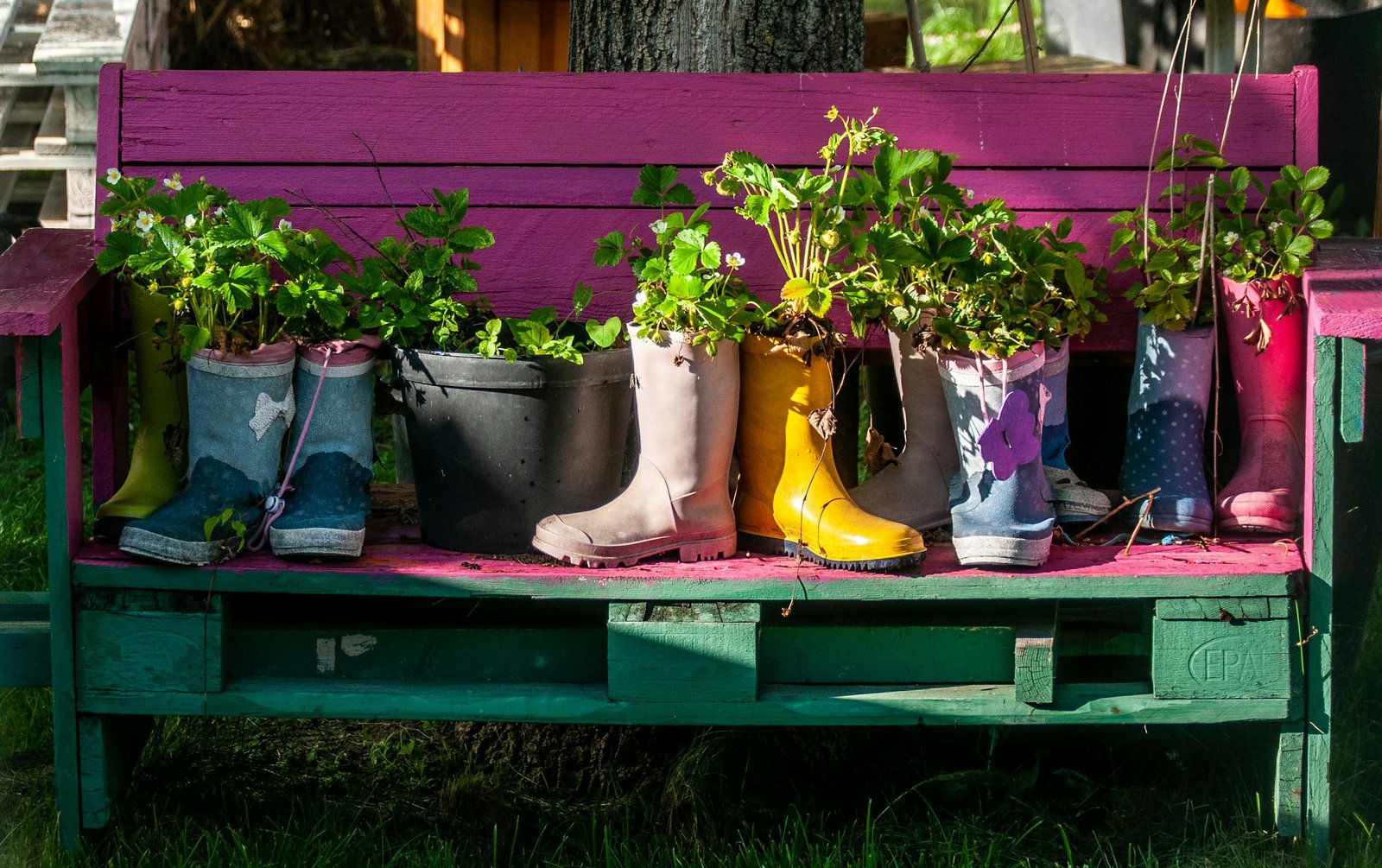
Old buckets, storage boxes, crates, even those large plastic tubs hiding in cupboards… they can all work. I’ve used things I probably wouldn’t have looked at twice before, and somehow they’ve become part of the garden now. As long as you add drainage holes and give the plants enough space, most containers will do the job just fine.
It does mean the garden looks a little… mixed. Different shapes, sizes, colours. But there’s something quite nice about that. It feels less staged and more lived-in.
Common Mistakes When Choosing Containers
I’ve definitely made a few mistakes here—some of them more than once.
One of the biggest ones is going too small. It’s tempting, especially when you’re trying to fit everything into a tight space, but plants need more room than you think. If they’re cramped, everything becomes harder—watering, feeding, growth.
Another one is forgetting about drainage. Or thinking you can “manage” it without proper holes. That never really works out long term. The soil stays too wet, and the roots suffer for it.
And then there’s overcrowding. I still catch myself doing it—trying to squeeze in just one more plant. But it usually backfires. Less airflow, more competition, and suddenly everything feels a bit stressed.
So now, I try (not always successfully) to give each plant a bit more room than I think it needs. And more often than not, it pays off.
The Best Soil Mix for Container Vegetables
This was probably the biggest mindset shift for me. On the farm, soil was just… there. Alive, balanced (most of the time), and doing its job. So naturally, I assumed I could use garden soil in my pots. That didn’t go well. It turned heavy, compacted, and water just sort of sat there. The plants never really took off.
The difference is actually quite simple. In a garden bed, soil has structure—worms, airflow, natural drainage, and space for roots to wander. In a container, none of that exists unless you build it. Everything is confined. Water has nowhere to go except down, and if the soil is too dense, roots struggle quickly.
That’s why a good mix matters so much more in a vegetable garden in containers. You need something that holds moisture but still drains well. Light enough for roots to grow easily, but rich enough to support them.
What’s worked for me is a simple blend: compost for nutrients, coco coir (or peat) to hold moisture, and perlite or grit for drainage. It doesn’t have to be complicated, but it does need balance. Too heavy, and growth slows. Too light, and you’re watering constantly—which I’ve definitely done more times than I’d like to admit.
And feeding becomes more important too. In beds, nutrients build over time. In containers, they get used up quickly. So I top up with compost or add a liquid feed now and then.
Once the soil is right, though, everything else becomes much easier.
Planning and Arranging Your Container Garden
This is where things started to feel… smaller. Not in a bad way, just different. On the farm, I never really had to think too hard about where things went. There was always more space somewhere. But with a vegetable garden in containers, every pot has to earn its place.
At first, I placed things a bit randomly—wherever there was space, wherever it looked nice. But I quickly realised that sunlight doesn’t care about aesthetics. Some spots got full sun all day, while others barely saw a few hours. So I started paying attention. Tomatoes and peppers went to the sunniest spots, while herbs and leafy greens tucked in happily where it was a bit softer.
Then there’s the whole idea of vertical space, which I hadn’t really needed before. Now, it makes a difference. Climbing beans, peas, even cucumbers—they can grow up instead of out, which frees up room for everything else. It’s a bit like layering the garden rather than spreading it.
Grouping plants has helped too. Those that need more water stay together, and the ones that prefer it drier get their own corner. It sounds simple, but it saves a lot of guesswork later on.
And I’ve had to get better at asking a slightly uncomfortable question: how much do we actually need? It’s easy to overplant (I still do), but in a smaller space, it shows quickly. So now I try to focus on what we’ll really use—and give those plants the space to do well.
Best Vegetables to Grow in Containers (High Yield Choices)
Not every vegetable enjoys life in a pot, and I think that’s important to admit upfront. Some plants are perfectly happy adapting to a vegetable garden in containers, while others spend the season looking mildly offended by the whole arrangement. Over time, I’ve learned it’s easier to grow what naturally suits the space rather than trying to force everything into it.
Tomatoes
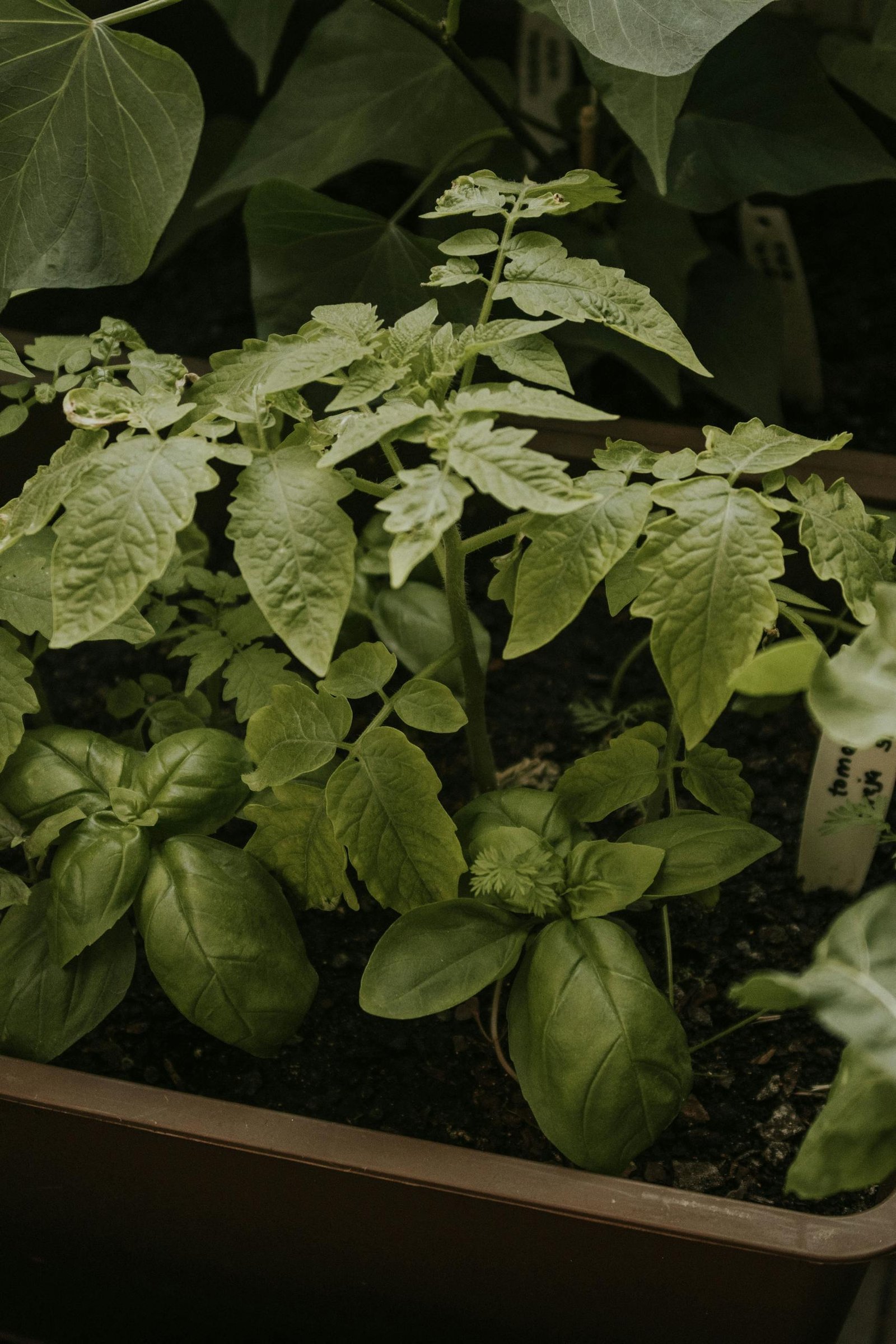
are probably the obvious favourite, especially smaller or bush varieties. As long as they have enough root space and regular feeding, they’re incredibly productive. Peppers and chillies do well too because they actually like the warmth containers hold onto during summer.
Leafy greens
have been some of the easiest crops overall. Lettuce, spinach, rocket, and chard don’t need huge pots, and because they grow quickly, you get that satisfying feeling of harvesting something almost constantly. Herbs are equally happy this way too. Basil and sage, in particular, seem to love the extra warmth containers provide, especially once summer properly settles in.
Potatoes
surprised me the most. Grow bags make them ridiculously simple, and there’s still something satisfying about tipping out a bag and finding potatoes hidden underneath like buried treasure. Meanwhile, beans and cucumbers make brilliant use of vertical space, which suddenly makes a small garden feel much bigger.
And then there are the plants I now grow almost automatically every year because they’ve earned their place: Tomatoes, Beans, Strawberries, Chard, Sorrel, Basil, Sage, Cucumbers, and Nasturtiums spilling over the edges wherever they can. Calendulas too, of course. I tuck them into containers partly because they’re cheerful, but also because the pollinators seem to adore them.
Honestly, I think that’s the real trick with container gardening—growing what naturally wants to work with the space. Once you stop fighting that, everything becomes easier, and the garden starts to feel abundant in its own way.
Companion Planting in Containers (Working With the Soil, Not Against It)
I realised quite quickly that if I wanted this vegetable garden in containers to stay low-maintenance, I couldn’t rely on feeding all the time—especially with the perennial fruit bushes. So instead, I went back to thinking the way I used to in garden beds: what can the plants do for each other?
That’s where companion planting started to make more sense again. Not just pairing things randomly, but actually looking at soil support and balance.
For example, I added a few bean plants in with the fruit bushes. It’s a small detail, but legumes fix nitrogen in the soil, which slowly benefits the plants around them. In a container, where nutrients are limited, that kind of quiet support really helps.
Then I planted strawberries around the edges. Partly to use the space, but mostly to protect the soil. They act as a kind of living mulch—covering the surface, holding moisture in, and still producing fruit. It’s one of those combinations that just works without much effort.
I’ve found that the best groupings follow a simple idea: balance. Deep-rooted plants with shallow ones, heavy feeders alongside lighter ones, and anything that improves the soil tucked in where it can do its job.
You can build on that with things like basil near tomatoes or lettuce filling in gaps, but it doesn’t need to be complicated. When the soil is supported, everything else tends to fall into place—and that means less work in the long run.
Watering and Feeding Container Plants Properly
This was probably the biggest adjustment for me after years of growing straight into the ground. In a garden bed, the soil holds moisture surprisingly well. Containers, however, are far less forgiving. On a warm day, pots can go from thriving to full theatrical collapse in a matter of hours.
And then there’s the opposite problem: too much water.
We had torrential thunderstorms yesterday, and I discovered—slightly too late—that two of my pots didn’t actually have drainage holes. Those poor plants were essentially sitting in tiny bathtubs, slowly drowning while I stood there in the rain questioning my life choices. One pot nearly floated away entirely, which honestly felt a bit rude after all the effort of planting it.
Good drainage matters far more in container gardening than people realise. Without drainage holes, water becomes trapped at the bottom of the pot, the soil turns waterlogged, and roots can’t access oxygen properly. Before long, roots begin to rot, the soil structure breaks down, and the plant starts declining no matter how much you care for it. So now I check every container before planting, even the decorative ones that pretend they were definitely designed for gardening.
The material and size of the pot matter too. Terracotta dries out quickly, while plastic holds moisture longer. Smaller pots always need watering more often, whereas deeper containers stay stable for longer during hot weather.
Feeding works differently in pots as well because nutrients wash out faster with regular watering. Heavy feeders like tomatoes and cucumbers usually need compost or liquid feed throughout the season, while herbs are often happier with less fuss.
Honestly, container gardening is mostly learning that plants need balance—and that drainage holes are not optional, no matter how pretty the pot is.
Common Container Gardening Mistakes (And How to Avoid Them)
Choosing Containers That Are Too Small
I completely underestimated this at first. A tiny pot with a tiny tomato plant looks perfectly reasonable in spring, and then suddenly by July the plant is enormous, top-heavy, permanently thirsty, and judging you daily. Bigger containers hold moisture better, give roots space to grow, and generally create far healthier plants.
Forgetting Drainage Holes
Apparently, I needed a thunderstorm to properly learn this lesson. Containers without drainage holes quickly become swamp simulations, and roots absolutely hate sitting in waterlogged soil. If excess water can’t escape, the roots struggle for oxygen, rot starts setting in, and the whole plant declines surprisingly fast.
Overcrowding Plants
This one is very tempting when space feels limited. I always think, “Surely one more plant will fit.” Sometimes it does. Sometimes the entire container turns into an overcrowded jungle with no airflow and everyone competing for water like it’s the last bottle left in a heatwave.
Treating Containers Like Garden Beds
This was probably the biggest mental adjustment for me. Pots dry out faster, lose nutrients quicker, and heat up more during summer. You simply can’t garden exactly the same way you would in open ground. Once I stopped expecting that, things became much easier.
Using Poor Soil
Regular garden soil usually becomes compacted in containers and stops draining properly. Containers need a lighter mix that can hold moisture while still allowing airflow around the roots. Healthy soil really does make the difference between struggling plants and productive ones.
Forgetting Vertical Space
When growing in a smaller area, height becomes incredibly useful. Beans, cucumbers, and even some squash varieties can climb upwards instead of sprawling everywhere. Honestly, once you start growing vertically, you suddenly realise how much unused space was sitting there the whole time.
Seasonal Care and Maintaining Your Container Garden
Spring: Starting Fresh
Spring is the hopeful stage where every pot looks full of potential and I temporarily forget all the gardening mistakes I made the previous year. This is usually the time to refresh compost, top up nutrients, and check whether containers survived winter without cracking dramatically in half.
It’s also the best moment to divide overcrowded plants or move things around before the growing season properly begins.
Summer: Watering, Feeding, and Mild Panic
Summer is when container gardens suddenly become very demanding. Pots dry out quickly, heavy feeders need regular feeding, and everything seems to grow at double speed overnight.
This is also when strawberries begin sending out runners everywhere like tiny escape plans. I usually let a few root into small pots so I can grow new plants for free later on. Meanwhile, herbs and flowers like calendula and nasturtiums start producing seeds, and honestly, collecting them feels strangely satisfying. Future gardens hidden inside tiny envelopes.
Autumn: Slowing Things Down
By autumn, the containers start looking a little tired, and if I’m honest, so do I. This is when I begin clearing dead plants, cutting back growth, and deciding what’s worth overwintering.
Some plants keep producing surprisingly late into the season though. Chard, sorrel, kale, and herbs often continue long after summer crops are finished.
Winter: Protecting What Survives
Winter container gardening is mostly about protection and patience. Perennial plants and fruit bushes usually need less water, but they still shouldn’t completely dry out.
Chilli plants, however, are surprisingly worth saving. I cut mine right back once fruiting finishes and move them into a cool, bright room indoors for winter. They look slightly tragic for a while, like abandoned sticks in pots, but once spring returns, they usually burst back into growth far earlier than newly sown plants.
Conclusion:
I’ll be honest, I’m still learning my way through this whole vegetable garden in containers approach. After years of growing with endless space around me, this smaller, more flexible style of gardening has been a real adjustment—but also a surprisingly comforting one. It’s taught me to slow down a bit, to think more carefully about what we actually need, and to work with the space I have instead of wishing for the one I lost.
And honestly, there’s something lovely about a garden that can move with you. A little messy, a little mismatched, but still growing anyway.
I know I’m only at the beginning of this container gardening journey, so if you’ve been growing this way for a while, I’d genuinely love to hear your tips, tricks, or favourite plant combinations. I have a feeling this kind of gardening comes with a lot of wisdom that only experience teaches.
And if you’re growing some of the same things, I’ve also shared more detailed posts on growing strawberries and overwintering chillies, which might help if you’re planning your own container garden this season.
For now though, I think that’s what I’m learning most from all of this: gardens don’t always have to be permanent to matter. Sometimes they just need to grow where you are, for as long as you need them to.