School lunchbox meal prep wasn’t something I jumped into with enthusiasm—I sort of backed into it after one too many chaotic mornings and at least a few “why is this lunchbox still full?” moments. It took me a while, if I’m honest. Probably a good six months before I became more intentional about it all, once life started to feel a bit more settled again.
I’ve always had this quiet belief that food does more than just fill us up. It really does affect how we feel—energy, mood, focus… all of it. And you can see it in kids so clearly. One day they’re steady and happy, the next it’s like everything is just slightly off, and you start wondering what actually went into that day.
The tricky part is, kids eat on impulse. Whatever looks good in the moment usually wins, and fair enough—I’m not exactly reaching for lentils when I’m tired either. But those quick choices don’t always carry them through the day in the way they need.
So I started seeing meal prep a little differently. Not as this big, organised system (because honestly, that’s not me), but more as a quiet bit of support in the background. A way to think things through before the rush, so I’m not throwing together random bits at 7 a.m. and hoping for the best.
And no, it doesn’t mean every lunchbox comes back empty—let’s be realistic. But it does mean I feel a bit better about what’s in there. A bit more balanced, a bit more thought behind it. And most days, that’s more than enough.
Why School Lunchbox Meal Prep Makes Life Easier
At first, I didn’t really see school lunchbox meal prep as something that would make a big difference—I thought it might just be another thing to add to the list. But actually, over time, it turned out to be one of those small shifts that quietly makes everything feel easier. Because instead of standing in the kitchen each morning trying to come up with something on the spot, I already have a rough idea of what’s going in. And that alone takes away so much of the pressure.
Then, there’s the mental side of it. That constant “what do I pack today?” question disappears, which, honestly, is a relief. It’s such a small decision, but when you’re making it every single morning—usually while doing five other things—it adds up. So having even a loose plan in place just creates a bit more calm in the middle of the chaos.
At the same time, I’ve found that lunches tend to be a bit more balanced when I’ve thought them through ahead of time. Not in a perfect way, but in a more consistent one. There’s usually something filling, something fresh, and something they’ll actually eat, which, let’s be honest, is half the battle.
And then, almost without noticing, it starts saving money too. Less random grabbing, fewer forgotten bits going to waste, and more use of what we already have. It’s not dramatic, but it adds up over the week.
So while it might feel like extra effort at the beginning, it really does pay off. Not all at once, but slowly—in calmer mornings, more reliable lunches, and one less thing to think about when everything else already feels like a lot.
What Makes a Balanced School Lunchbox
For a long time, I thought a “good” lunchbox just meant something that would actually get eaten—and honestly, that still matters a lot. But over time, I started looking at it a little differently. Not in a complicated way, just with a bit more awareness of what actually helps them get through the day feeling steady, not starving by 10 a.m. or crashing by lunchtime.
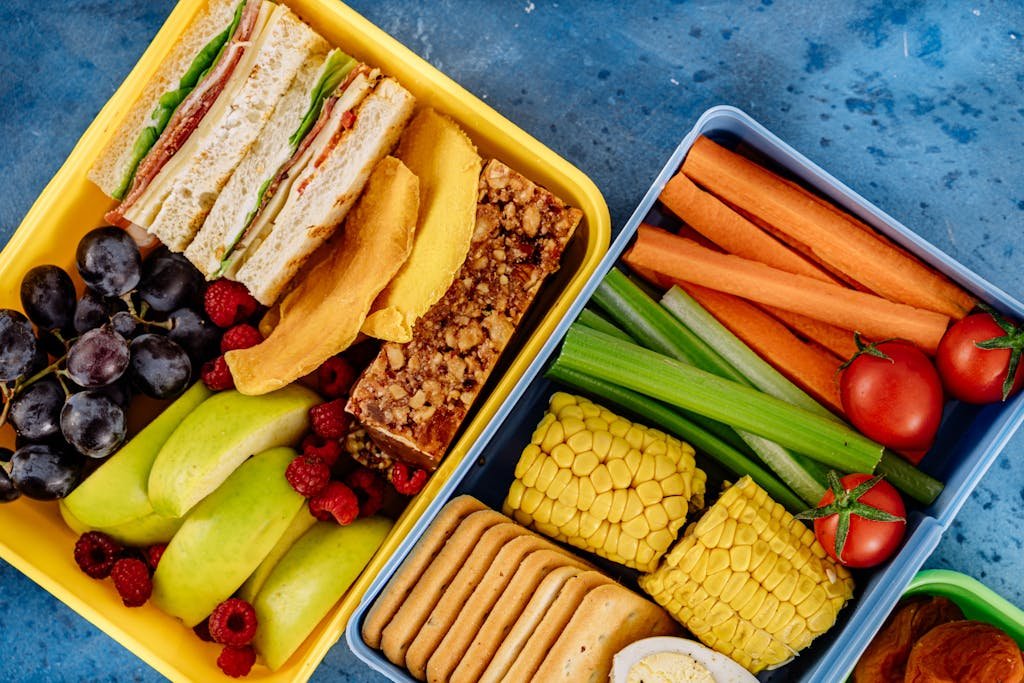
So now, I try to think of it in simple parts. First, something with protein—because that’s the bit that really helps keep them full and focused. It doesn’t have to be anything fancy, just something like eggs, yogurt, chicken, or even a handful of nuts. Then, I add a source of carbohydrates, like bread, pasta, or wraps, which gives them the energy they need, especially in those busy school mornings.
After that, I usually include a bit of healthy fat—cheese, seeds, or nut butter—because it helps everything last a bit longer. And then, of course, something fresh like fruit or veg. Not always perfectly eaten, but I still include it because sometimes they surprise you.
And yes, I nearly always add a small treat. Not because they need it, but because it keeps things realistic. It takes away that feeling of restriction and, if anything, makes the rest of the lunchbox more appealing.
It’s not about getting it perfect every day. Some days are more balanced than others, and that’s fine. But having a rough structure in mind makes it so much easier to throw something together that actually supports them, without overthinking it.
Essential Tools & Food Safety Tips for Easy Lunchbox Meal Prep
I used to think school lunchbox meal prep was mostly about the food—but actually, the tools you use (and how you store things) make just as much of a difference. Not in a “you need loads of stuff” kind of way, just a few simple things that make everything easier and a bit more reliable.
Bento Boxes: Making Food Feel More Manageable
Once I switched to a simple bento-style lunchbox, things immediately felt easier. Everything has its place, portions look less overwhelming, and even very basic food feels a bit more put together. And with kids, that visual side really does help.
Keeping Food Fresh (Ice Packs Matter More Than You Think)
Anything that needs to stay cold—like yogurt, cheese, or cooked meats—really does need a bit of help. I learned that the hard way… skipping an ice pack once was enough. Now I just add one if I’m unsure. It keeps everything fresher and a lot more appealing by the time lunch comes around.
Leak-Proof Containers: Avoiding the Mess
This is one of those small things that makes a big difference. Anything slightly “risky”—fruit, dips, yogurt—goes into a proper sealed container. It saves the rest of the lunch from turning soggy and avoids those unpleasant surprises later.
Small Snack Pots: Making Mornings Easier
Having a few small reusable containers for snacks makes prep so much quicker. I can portion things out ahead of time—nuts, crackers, fruit—and just grab them in the morning instead of starting from zero.
Fridge Prep: The Real Time-Saver
And then there’s what’s happening in the fridge. A few clear containers with prepped ingredients—washed fruit, chopped veg, cooked bits ready to go—make everything feel lighter during the week. It’s not about being perfectly organised, just making the next step easier.
So again, it’s not about having everything or doing it perfectly. Just a few simple tools and habits that keep food fresh, make prep easier, and take away a bit of the stress from busy mornings.
Easy School Lunchbox Meal Prep Ideas (That Even Picky Eaters Might Eat)
When it comes to school lunchbox meal prep, I’ve realised it’s not really about coming up with endless new ideas—it’s more about how you present the simple ones. Because the truth is, kids (especially picky ones) don’t always want variety… they want familiar things, just slightly different.
So instead of overcomplicating it, I stick to a few basics and make small changes that make them feel a bit more fun or manageable.
Wraps & “Little Snakes”
Wraps are one of my go-tos because they’re quick and flexible. But instead of leaving them whole, I slice them into little pinwheels or strips—what we somehow started calling “little snakes.” And for whatever reason, that makes them much more likely to be eaten.
For picky eaters, this works really well because it feels less overwhelming. Smaller pieces, easier to handle, and they can eat a little at a time instead of committing to a full wrap.
Pasta & Simple Grain Salads
A small portion of pasta or rice with a bit of cheese or leftover protein is always a safe option. I keep it very simple—nothing too mixed or complicated.
With picky eaters, I’ve found it helps to keep ingredients separate where possible. Too many things combined can be an instant “no,” even if they like each part individually.
DIY Snack Boxes (Always a Win)
These are probably the most reliable in our house. A mix of cheese, crackers, fruit, nuts, and maybe something sweet—it feels relaxed and gives them a bit of choice.
And that choice matters. Especially for kids who are unsure about food, it takes away the pressure and lets them eat what they feel comfortable with.
Leftover-Based Lunches (Keep It Familiar)
Using leftovers has made things so much easier, but I try to stick to foods they already know. A bit of chicken, pasta, or even roasted veg—just in smaller portions so it doesn’t feel like too much.
No-Cook Options (For Those Mornings)
And then there are the mornings where nothing is prepped—and that’s completely fine. Yogurt, fruit, nuts, crackers… it’s simple, but it still covers what they need.
Common School Lunchbox Meal Prep Mistakes
I’ve made quite a few mistakes with school lunchbox meal prep over time, and honestly, most of them came from trying too hard at the beginning. One of the biggest was overcomplicating everything. I’d plan way too many different meals for the week, thinking variety was the key, but it just made the whole process feel overwhelming and impossible to keep up with.
Another mistake was ignoring what actually gets eaten. I used to pack what I thought was a “good” lunch, rather than what I knew my kids would reliably eat. And of course, those are not always the same thing. It took a bit of trial and error (and a few untouched lunchboxes) to realise that familiar food wins almost every time.
I also used to prep too much in one go. Everything would look great on Sunday, but by Thursday things didn’t feel as fresh anymore, and the lunchboxes started losing appeal. Now I do a smaller prep and top things up midweek if needed, which keeps everything much more realistic.
Another common mistake was trying to make every lunchbox exciting. That sounds nice in theory, but in reality, kids don’t need a new “Pinterest lunch” every day. In fact, too much change can sometimes have the opposite effect. Simplicity works better than creativity most of the time.
And finally, expecting it to be perfect. That one took me the longest to let go of. Some weeks are smooth, others are a bit chaotic, and that’s just how family life is. Once I stopped aiming for perfection, the whole thing became a lot easier to stick with.
Creating a Simple Weekly Routine
Once I stopped trying to figure out school lunchbox meal prep every single morning, everything felt a lot lighter. Instead of starting from scratch each day, I now follow a very simple rhythm through the week. Nothing rigid, just a loose routine that takes the pressure off.
And what made the biggest difference, surprisingly, was starting a bit earlier in the week—not in the kitchen, but just by sitting down for a few minutes and thinking it through.
A Simple Weekly Lunchbox Routine
Thursday Evening (After Dinner – Keep It Relaxed)
- Sit down for a few minutes and write a simple list
- Include the kids where you can (even loosely)
- Ask what they’ve been enjoying or would like again
- Keep it realistic—familiar foods, nothing too complicated
This step alone makes a huge difference. It gives them a bit of ownership, and you’re not guessing what might get eaten.
Friday or Saturday (Shopping Day)
- Shop based on your list (and what you already have)
- Focus on ingredients that can be mixed and matched
- Pick 2–3 main lunch options for the week
Sunday (Light Prep Day)
- Prep a few basics: cook pasta/rice, boil eggs
- Wash and chop fruit and veg
- Portion out easy snacks if you have time
Nothing major—just enough to make the week easier.
Monday – Wednesday
- Build lunchboxes from what’s already prepped
- Keep things simple and familiar
- Rotate the same few options
Midweek Top-Up (Wednesday or Thursday)
- Refill anything that’s running low
- Chop more fresh items if needed
- Add something small and new if you feel like it
Thursday – Friday
- Use up leftovers
- Keep lunches easy and low-effort
- Don’t overthink it (end-of-week energy is real)
And that’s really it. It’s not perfect, and it doesn’t look the same every week—but it works. And more importantly, it feels manageable, which is what makes it stick.
In the End…
School lunchbox meal prep, for me, has never been about getting it perfect. It’s been more about finding a rhythm that fits into real life—messy mornings, changing appetites, and all the little unpredictable moments that come with kids. And slowly, over time, it’s become less of a daily scramble and more of something that quietly supports the week in the background.
What I’ve really learned is that small changes make the biggest difference. A bit of planning on a Thursday evening, a simple shopping list, a few basic prep steps on the weekend—it doesn’t sound like much, but it takes so much pressure off those early mornings. And when mornings feel calmer, everything else tends to follow.
Of course, not every lunchbox comes back empty. And not every week runs smoothly. But I’ve stopped seeing that as failure. Instead, it’s just part of the process. Kids change, tastes change, and some weeks are just more chaotic than others. That’s normal.
The biggest shift for me has been letting go of the idea that everything has to be exciting or different every day. Once I started focusing on familiar, balanced options—and keeping things simple—it actually became easier for everyone involved.
So if you’re just starting out, I’d say begin small. Pick a couple of ideas that work, build from there, and adjust as you go. It doesn’t need to be complicated to be effective.
And most of all, give yourself a bit of grace with it. Because in the end, it’s not about perfect lunchboxes—it’s about making school mornings feel just a little bit easier for everyone.